The Numbers Tell a Story We Need to Hear
If you’ve been scrolling through housing news lately, you might have noticed something unexpected breaking through the doom-scroll: community land trusts are everywhere. Not everywhere in the way coffee shops are everywhere, but everywhere in the way a quiet movement suddenly becomes impossible to ignore. The data from 2025 confirms what housing advocates have been quietly building toward for decades. According to Grounded Solutions Network Community Land Trust Data, there are now over 330 active community land trusts operating across the United States. That’s a 40 percent jump in just five years. To put that in perspective: this growth accelerated after the 2022 Inflation Reduction Act unlocked federal HOME Investment Partnership Program funding specifically designated for community development. Translation: Washington finally noticed what local organizers have known all along.
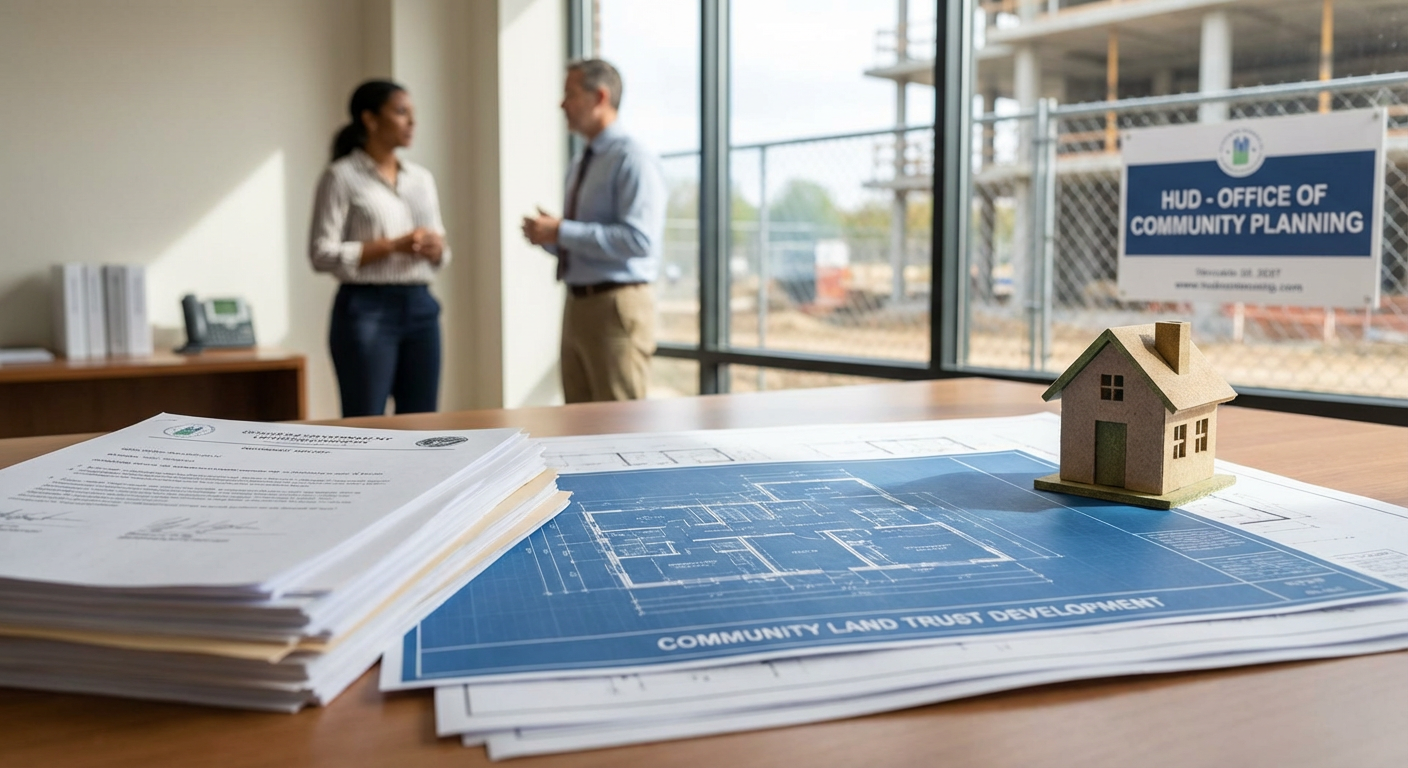
The federal government took note too. The Biden administration’s FY2025 budget set aside $35 million specifically for CLT capacity building through HUD’s Office of Community Planning and Development. That might sound like bureaucratic jargon, but it’s actually historic. This is the first time Congress has written a dedicated federal line item for community land trusts. Someone sat in a budget meeting and decided that this particular tool for keeping people housed deserves the same kind of institutional support we give to highways and military installations. That matters.
What Actually Happens When a CLT Buys Your Neighborhood
Let’s make this real. In Atlanta’s Westside, the Westside Future Fund community land trust closed on 200 homes in 2024. Those homes sold for an average of $142,000 each. In the same neighborhood, comparable properties through conventional sales channels moved for around $380,000. That’s not a typo. That’s a difference of $238,000 per home. For families making $40,000 to $60,000 a year, that difference isn’t abstract. It’s the difference between generational stability and displacement. It’s whether your kids stay in the school they know or whether you’re packing boxes in the middle of the year.
Here’s how it works in practice: the CLT buys the land underneath the house. You buy the house itself. You own the building, the structure, the walls where your family has its life. The CLT holds the land permanently, which means forever. When you sell, the CLT has the right of first refusal. When the next person buys, they buy at an affordable price too. The land stays affordably priced not because someone is subsidizing it indefinitely, but because the model is built to sustain itself. It’s elegant in the way that good policy is elegant: it solves the problem at its root instead of just putting a band-aid on it.
The Foreclosure Numbers That Change the Conversation
One of the most revealing statistics from the 2025 housing data involves what happens when crisis hits. When interest rates spiked in 2023 and 2024, families everywhere faced impossible choices. Pay for heat or pay the mortgage. Pay for medicine or pay the mortgage. Conventional low-income homeowners faced a foreclosure rate of 2.8 percent during that period. That might not sound catastrophic until you do the math: nearly 3 out of every 100 low-income families lost their homes. For CLT homeowners during that same period, the foreclosure rate was 0.5 percent. That’s Lincoln Institute of Land Policy CLT Research data, and it tells us something crucial: this model doesn’t just create housing stability in good times. It creates resilience in the hard times.
The reason is partly structural. Your mortgage payment is calculated only on the price of the building, not the land underneath. That lower purchase price means lower monthly payments, and lower monthly payments mean there’s actually money left in the budget when emergencies happen. When you’re living paycheck to paycheck, that cushion is survival. The other part is cultural. CLTs have community accountability built in. There’s usually a board of locals who understand what’s happening in your neighborhood because they live in it. When families struggle, CLTs are more likely to work with you on modifications, forbearance agreements, or temporary arrangements rather than moving straight to foreclosure.
The Neighborhood Effect: When CLTs Reach Critical Mass
Here’s where it gets really interesting. Individual CLT homes create stability for individual families. But something else happens when a CLT program reaches a certain scale. When cities have CLT programs covering at least 500 units, the Urban Institute found measurable differences in neighborhood stability itself. In those neighborhoods, the displacement of long-term residents in gentrifying areas slowed significantly compared to neighborhoods relying only on inclusionary zoning policies or other tools. The same neighborhoods where we used to watch long-time residents pack up and disappear suddenly stabilized.
This matters because housing policy often feels like we’re choosing between two bad outcomes: either we restrict housing development entirely and make affordability worse, or we allow market forces to work and watch communities dissolve. CLTs at scale offer a third path. Development can happen. Neighborhoods can improve. New people can move in while old-timers stay. These things can happen together instead of at each other’s expense. It’s not magic. It’s just what happens when the tool is designed right and funded adequately.
What This Means for Where You Live
If you’re reading this and thinking about your own neighborhood, your own kids’ school, your own aging parents’ place in the community where they built their life, the question becomes practical: does your city have a CLT? If not, why not? If yes, is it funded adequately? Is it reaching the people who need it most? These aren’t abstract questions for housing nonprofit conferences. They’re questions worth asking at city council meetings, worth bringing up with your council member over coffee, worth organizing around with neighbors who feel the same way.
The 2025 data shows us that this tool works. It works in Atlanta and it works in hundreds of other places. Federal funding exists now. Political permission exists. What’s needed is local will. That comes from people who care about their neighborhoods enough to show up, ask questions, and push for what’s possible. If you’ve watched families leave because they couldn’t afford to stay, if you want your neighborhood to change without erasing the people who live there, this is worth your attention. Worth a Saturday morning meeting. Worth reading the council minutes.