All posts by Myrtle Davis

Why Our Neighborhood Mutual Aid Network Hit a Wall (And What We’re Learning From It)

The Beautiful Mess We Created

Six months ago, our West Side mutual aid network was the kind of grassroots success story that gets written up in progressive magazines. Started during the pandemic by three neighbors who noticed folks struggling with groceries and rent, it had grown into a web of resource sharing that touched nearly 400 households. We had regular food distributions, a robust tool library, childcare swaps, and a text chain that could mobilize help for anyone facing an emergency within hours.

Why Our Neighborhood Mutual Aid Network Hit a Wall (And What We're Learning From It)
Why Our Neighborhood Mutual Aid Network Hit a Wall (And What We’re Learning From It)

Then we hit what organizers politely call “growing pains” and what I’m calling the Great Philosophical Fork in the Road of 2024. The network basically split into two camps over questions that sound wonky but get to the heart of how mutual aid actually works: Should we formalize with a nonprofit structure? How do we handle people who take more than they give? What’s our responsibility when someone’s need goes beyond what we can handle?

The tensions blew up at our monthly meeting in March. Sarah, who’d been coordinating food distribution, announced she was stepping back because the informal system was “unsustainable and unfair to volunteers.” Meanwhile, Marcus argued that adding bureaucracy would kill the very spirit that made our network special. By the end of that meeting, we had two separate groups planning two separate approaches to mutual aid in the same neighborhood.

The Case for Getting Official

Sarah’s frustration didn’t come from nowhere. As our network grew, so did the administrative load. She was spending 15-20 hours a week coordinating food pickups, managing the spreadsheet of who needed what, and fielding crisis calls at all hours. Without formal structure, everything relied on individual goodwill, which meant a few people were carrying most of the burden.

The “formalization” camp wants to establish a nonprofit with a board, apply for grants, and create clear protocols for distribution. They point to research from mutual aid networks in Portland and Detroit showing that groups with some institutional structure last longer and help more people consistently. They’re not wrong about the sustainability issues.

Take our tool library, which started as a brilliant idea to reduce waste and save money. Tools lived in various garages and basements, tracked through a Google Doc that worked fine when 20 people were involved. But with nearly 100 families borrowing everything from power drills to pressure washers, the system became chaotic. People couldn’t find tools, tools went missing, and hosts got overwhelmed managing their corner of the library.

Sarah’s group argues that formal systems create accountability. They want clear membership criteria, structured volunteer shifts, and partnerships with established organizations. Their vision includes a small budget, insurance coverage, and maybe even a part-time coordinator position. It’s mutual aid, but with the infrastructure to make it reliable.

The Case for Staying Scrappy

Marcus represents the other side of this divide, but his concerns go deeper than just wanting to avoid paperwork. He thinks formalization changes what makes mutual aid different from traditional charity. In his view, the moment you create official structures, you start creating barriers between helpers and helped, deserving and undeserving, insiders and outsiders.

His camp worries about mission creep. They’ve seen what happens to grassroots organizations that pursue grants: suddenly you’re spending more time on reports than on relationships, and your priorities start reflecting what funders want rather than what the community needs. They prefer the network’s current approach, where anyone can identify a need and rally others to meet it.

The tool library is actually their favorite example. Yes, it’s messy, but that messiness reflects real relationships. When José needs a circular saw, he doesn’t fill out a form. He texts Maria, who connects him with David, and they end up having a conversation about José’s deck project that leads to David offering to help with the build. That’s the kind of community building that gets lost in formal systems.

Marcus’s group also raises questions about who gets to participate in formalized mutual aid. When you create membership criteria and official protocols, you inevitably exclude some people who could benefit from or contribute to the network. They point to the undocumented families in our neighborhood who might be reluctant to engage with anything that looks too official, even if it’s meant to help.

What Both Sides Are Missing

After months of watching this unfold and talking with people on both sides, I think the real issue isn’t structure versus freedom. It’s that our network grew beyond what any single model could handle without us really thinking through what we were trying to achieve.

Both camps are responding to real problems. Sarah is absolutely right that volunteer burnout will kill mutual aid faster than any amount of bureaucracy. The people doing the work need support, clear expectations, and sustainable systems. But Marcus is also right that formalization can create its own barriers and change the fundamental character of mutual aid relationships.

What’s interesting is that neither side is talking much about power dynamics within our existing network. The informal system wasn’t actually as egalitarian as we liked to think. Decisions got made by whoever showed up to meetings, which tended to be people with flexible schedules and no childcare constraints. Resources flowed through relationships, which meant well-connected neighbors had easier access than newcomers or people who were more isolated.

The formalization debate has also revealed different understandings of what mutual aid is supposed to do. Some people see it as emergency assistance for community members facing temporary crises. Others view it as a way to build long-term community resilience and challenge systems that create scarcity in the first place. Those are related but different goals, and they suggest different approaches to organization and resource allocation.

The Experiment Continues

Here’s where things stand now: instead of one fractured network, we have what amounts to a natural experiment in mutual aid models. Sarah’s group has filed for nonprofit status and received a small foundation grant to pilot a structured food distribution program. Marcus’s crew continues the informal resource sharing through neighborhood social media groups and regular skill-shares.

Surprisingly, both approaches seem to be working for different people and different needs. The formal group is better at consistent service delivery and connecting people to outside resources. The informal network is more responsive to unusual requests and better at building relationships across lines of difference. Some families participate in both, choosing different pathways depending on their specific situation.

What we’re all learning is that mutual aid isn’t one thing, and maybe it shouldn’t be. Our neighborhood might actually be better served by multiple approaches operating in parallel, as long as they coordinate rather than compete. The real test will be whether both models can sustain themselves over time and continue to evolve based on what the community actually needs.

I’d love to hear from others who’ve navigated similar questions in their own networks. What have you found works? What doesn’t? The conversation continues at our monthly community coffee on the first Saturday of each month at Sunrise Cafe. Bring your questions, your ideas, and maybe your own stories of beautiful messes that are teaching us all something new about taking care of each other.

The Corner Store That Held Our Block Together

When Housing Was More Than Numbers

The Ramirez family ran the corner store on Maple Street for thirty-seven years. Mrs. Ramirez knew which kids needed free lunch money slipped into their backpacks and which elderly neighbors hadn’t picked up their prescriptions in too long. She cashed paychecks for folks without bank accounts, let people buy groceries on credit during tough weeks, and somehow always had exactly the right greeting card when someone’s grandmother passed away.

The Corner Store That Held Our Block Together

When their building sold last spring for three times what they paid for it in 1985, the new owners raised their commercial rent by 400 percent. The Ramirez family couldn’t afford it. The corner store is now another vacant storefront with newspapers taped over the windows. Our block lost something that city planners never quite capture in their affordable housing reports.

This is what happens when we talk about displacement only in terms of residential units. We count the apartments lost, the families forced to move further out, the rising rents that push longtime residents to choose between medicine and groceries. But we rarely track the small businesses that anchor our neighborhoods, the informal networks of care that keep communities functioning, the daily interactions that make a place feel like home.

Illustration for The Corner Store That Held Our Block Together

The Infrastructure Nobody Counts

Walk through any rapidly gentrifying neighborhood and you’ll see the pattern. The laundromat where people gathered to fold clothes and catch up on neighborhood news is now a boutique fitness studio. The family restaurant where teenagers worked their first jobs transformed into a wine bar with $18 appetizers. The auto shop that employed three generations of the same family got replaced by luxury condos.

Each loss might seem small in isolation. But together, they dismantle the economic ecosystem that allowed working-class families to build lives here. When Juan’s Auto Repair closed after forty years, six mechanics lost their jobs. More importantly, hundreds of neighbors lost access to affordable car repairs. Now they drive twenty minutes to find someone who won’t charge them $200 just to run diagnostics.

The city’s latest affordable housing plan mentions commercial displacement exactly twice in sixty-four pages. It focuses on preserving existing affordable units and creating new ones, both essential goals. But it doesn’t address how a neighborhood can maintain affordable housing while losing every business that made it livable for working families.

What Kept Rents Stable

Before the wave of speculation hit our area, Mrs. Chen owned four small apartment buildings on the same block. She lived in one of them, kept rents reasonable because she knew her tenants personally, and fixed things quickly because broken heaters affected her own comfort too. When her daughter moved to Seattle for work, Mrs. Chen sold to a property management company based in Atlanta.

The new owners raised rents to “market rate” within eighteen months. They hired the cheapest contractors for repairs, ignored tenant complaints, and eventually pushed out most of the longtime residents through a combination of neglect and intimidation. Three of the four buildings now sit half-empty because the rents are too high for the neighborhood but too low to attract the demographic the owners actually want.

This pattern plays out across the city, but rarely makes headlines. Small landlords who viewed property ownership as a modest investment strategy get bought out by companies that treat buildings like stock portfolios. The human relationships that once provided some protection for tenants disappear into spreadsheets managed from corporate offices hundreds of miles away.

Building Different Futures

Some neighborhoods are fighting back by creating new models that prioritize community stability over maximum profit. The resident council at Riverside Apartments convinced the city to help them purchase their building when their corporate landlord decided to sell. Now they control their own rents and maintenance decisions through a limited equity cooperative structure.

The Maple Street Merchants Association is working with a community development financial institution to keep commercial spaces affordable for local businesses. They’ve helped three longtime establishments purchase their buildings at below-market rates, preventing displacement while maintaining the mix of services that makes the neighborhood functional for working families.

These solutions require patience, coordination, and the kind of detailed local knowledge that only comes from paying attention over time. They work because they address the whole ecosystem, not just individual pieces. When we organize around housing, we need to think about corner stores and auto shops and beauty salons too.

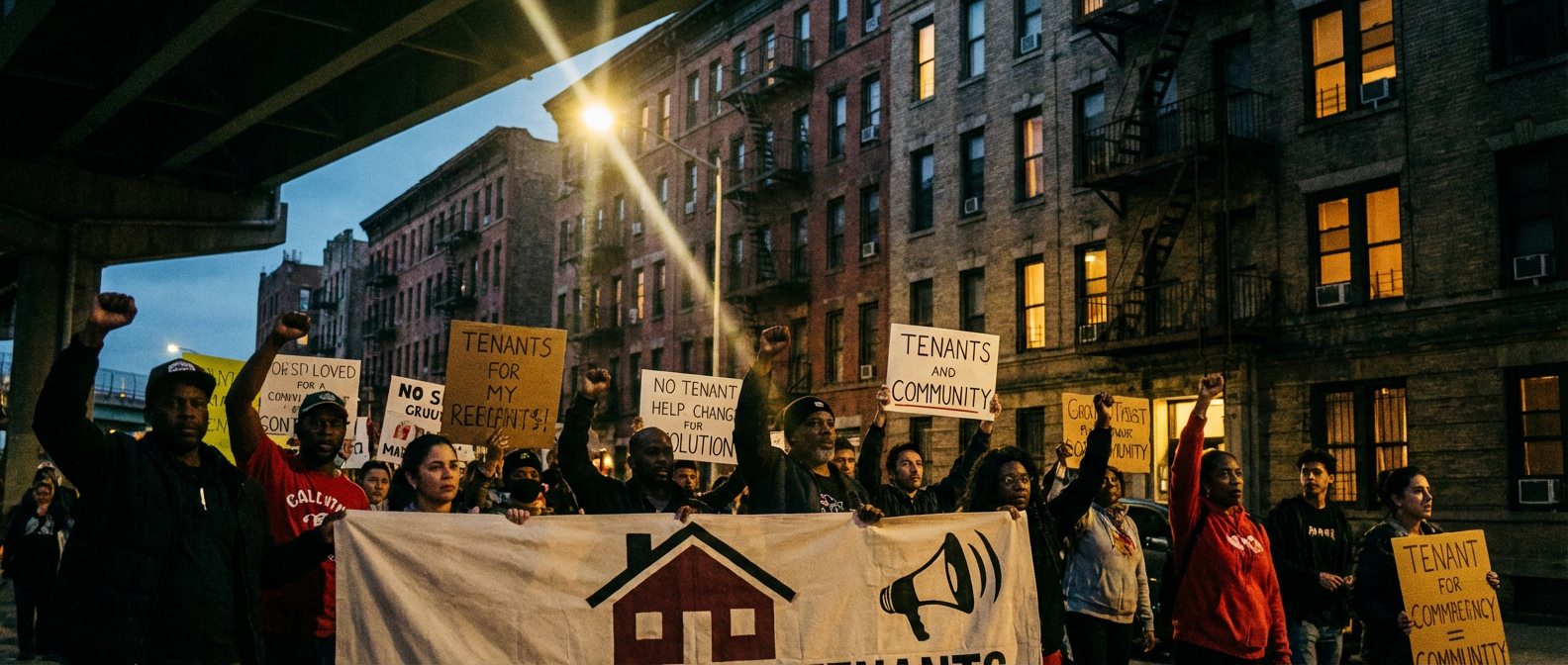
The city council meets every second Tuesday at 7 PM in the basement conference room at City Hall. Next month they’re reviewing the commercial rent stabilization ordinance that’s been stalled in committee since last spring. The Tenants Union is organizing carpools for anyone who wants to attend but doesn’t have transportation. Sometimes the most effective advocacy happens when we show up consistently for the boring meetings where real decisions get made.

Starting Where We Are

Last Saturday, twelve neighbors helped plant fruit trees along the vacant lot where Chen’s Hardware used to stand. We’re not trying to recreate the past or pretend that nostalgia alone can solve displacement. But we can build the infrastructure for whatever comes next.

The trees will take five years to produce fruit. By then, we hope to have figured out how to keep the lot in community hands, maybe through the land trust model that’s working in other cities. The Neighborhood Association meets every third Thursday at the library branch on Oak Street. We’re always looking for people who want to help research policy options, attend planning meetings, or just keep track of what’s happening with the properties around us.

Finding Sacred Space in a Changing World: How Faith Communities Navigate Modern America

The Shifting Reality of American Faith

Every Sunday morning, Sarah Martinez unlocks the doors of her small Presbyterian church in suburban Denver, knowing she’ll greet fewer familiar faces than her predecessor did a decade ago. The pews that once overflowed now hold maybe sixty people on a good week. Yet Sarah isn’t discouraged. Her community is part of something happening across America’s religious world: a quiet transformation rather than simple decline.

The numbers tell part of the story. According to Pew Research religion data, adults with no religious affiliation have doubled from 16 percent in 2007 to over 30 percent today. This is one of the most dramatic demographic changes in modern American history. But behind these statistics are complex human stories of searching, belonging, and community building that don’t fit neat categories.

What’s happening isn’t just abandonment. It’s evolution. Faith communities across the country are finding new ways to serve their neighborhoods while adapting to a culture where traditional religious authority doesn’t carry automatic weight anymore. The result? A more diverse, more intentional, and often more inclusive spiritual ecosystem than many people realize.

The Irreplaceable Social Fabric

At Temple Beth Shalom in Portland, Rabbi David Cohen has watched his congregation’s food pantry become a lifeline for hundreds of families during the pandemic. What strikes him most isn’t just how much need they address, but the relationships that form in the process. “We’re not just distributing groceries,” Cohen explains. “We’re creating connections between people who might never otherwise meet.”

This kind of social infrastructure is nearly impossible for secular organizations to replicate at scale. Faith communities bring together people across age groups, economic backgrounds, and life circumstances in ways that book clubs, hobby groups, or even neighborhood associations rarely achieve. They offer consistent gathering spaces, shared rituals that mark life’s passages, and networks of mutual support that extend far beyond formal membership rolls.

The pandemic highlighted this unique role when many community centers closed but churches, synagogues, mosques, and temples pivoted quickly to meet urgent needs. From drive-through food distribution to virtual grief support groups, religious communities showed their capacity to respond quickly to crisis while maintaining the relational bonds that make such responses work long-term.

Progressive Voices Rising

While conservative denominations face declining membership, progressive religious spaces are growing in ways that challenge assumptions about faith in America. Rev. Amanda Thompson’s United Church of Christ congregation in Austin has tripled in size over five years, drawing young families and longtime believers who want communities that affirm LGBTQ+ members, prioritize environmental stewardship, and engage actively in social justice work.

“People haven’t lost their hunger for transcendence or community,” Thompson observes. “They’ve lost patience with institutions that seem more focused on exclusion than love.” Her church’s approach reflects a broader trend among progressive faith communities that emphasize inclusion, intellectual honesty about difficult questions, and practical engagement with contemporary challenges like climate change and racial equity.

These growing progressive congregations often attract people who identify as “spiritual but not religious,” the fastest-growing category of religious self-identification in America. They offer ritual and meaning-making without requiring adherence to conservative social positions or literal interpretations of ancient texts. For many Americans, these communities bridge secular life and spiritual seeking.

Digital Faith and Real Connections

When lockdowns forced religious communities online, many leaders worried about losing the intimate connections that define congregational life. Instead, something unexpected happened. Pastor Michael Johnson’s Baptist church in suburban Atlanta discovered that virtual worship opened doors to participation they’d never imagined. Elderly members who couldn’t drive at night joined evening services. Parents with young children attended without childcare logistics. College students scattered across the country stayed connected to their home congregation.

Two years later, about 40 percent of those online participants continue to attend digitally even as in-person worship resumed. According to Religion News Service, this hybrid model has become permanent for many congregations, expanding their reach while maintaining intimate community bonds. Johnson notes that virtual coffee hours and online small groups created new forms of pastoral care and member connection that complement rather than replace traditional gathering.

The digital transition also sparked innovation in religious education, community organizing, and interfaith collaboration. Congregations discovered they could share resources across geographical boundaries, collaborate on social justice projects with partners nationwide, and offer specialized programming that might not be sustainable for individual communities alone.

Building Bridges Through Action

At the Phoenix Interfaith Coalition’s monthly meeting, representatives from thirty different faith communities gather to coordinate responses to housing insecurity, immigration challenges, and poverty in their metropolitan area. What began as an informal network has become one of the most effective advocacy organizations in Arizona, leveraging the moral authority and volunteer networks of diverse religious traditions to address systemic problems.

Imam Fatima Al-Rashid, who helps lead the coalition’s housing initiative, explains their effectiveness: “When Christians, Jews, Muslims, Buddhists, and Sikhs speak together about human dignity, elected officials listen differently.” The coalition has successfully advocated for zoning changes to support affordable housing, established legal clinics for immigrants, and created job training programs that have placed hundreds of people in stable employment.

These interfaith partnerships represent faith communities at their most collaborative and least sectarian. They show how religious conviction can motivate public engagement without imposing particular theological beliefs on broader society. By focusing on shared values like compassion, justice, and human dignity, these coalitions create space for both believers and secular allies to work together effectively.

The future of American faith communities may be smaller, more diverse, and less institutionally powerful than in previous generations. But it appears to be more intentional, more inclusive, and more deeply engaged with the practical challenges facing our communities. As these stories unfold in towns and cities across the country, they invite all of us to consider what forms of belonging and transcendence our communities most need, and how we might create them together.

Building Bridges Against Hate: How Communities Are Fighting Back Through Coalition and Connection

When the Numbers Tell a Story We Can’t Ignore

Sarah Martinez first noticed the change in her neighborhood when swastikas appeared on the community center walls. As a local organizer in Portland, Oregon, she had been tracking concerning trends for months, but this felt different. More brazen. More immediate. What she didn’t know then was that her community was experiencing part of a much larger crisis unfolding across the United States and Western Europe.

Building Bridges Against Hate: How Communities Are Fighting Back Through Coalition and Connection

Hate crime incidents have reached levels not seen in three decades, creating ripple effects that extend far beyond individual victims. The SPLC hate group monitoring efforts have documented more than 1,200 active hate groups operating across America. That’s a complex network of extremist organizations that have found new ways to recruit and organize. These aren’t abstract statistics. They represent real threats to real communities, and they demand real responses from people like Sarah who refuse to stand by and watch.

But here’s what makes Sarah’s story different from the headlines. Instead of feeling overwhelmed by the scope of the problem, she decided to start where she was, with what she had, and with the people around her. Her approach would become a model for community-based intervention. Research shows this works better than relying on law enforcement responses alone.

Illustration for Building Bridges Against Hate: How Communities Are Fighting Back Through Coalition and Connection

The Portland Model: Building Unexpected Alliances

Sarah’s first move surprised everyone, including herself. She called Rabbi David Stern from the local synagogue that had also been vandalized the week before. Then she reached out to Imam Abdullah Hassan, whose mosque had experienced harassment during Friday prayers. Finally, she contacted Father Michael O’Brien from St. Catherine’s, where parishioners had reported intimidating flyers left on car windshields.

The four leaders met at a coffee shop on a Tuesday morning, each bringing their own concerns and perspectives. What came out of that conversation was recognition that their communities faced a shared threat, one that needed a coordinated response. Within six weeks, they had formed the Portland Interfaith Alliance for Community Safety. They brought together Muslim, Jewish, and Christian congregations in ways that directly countered the divisive narratives promoted by extremist groups.

Their first joint action was a community safety walk through the neighborhood. Representatives from all three faith communities walked together, talked with residents, and documented concerns. Local news covered the event, but more importantly, neighbors who had felt isolated began to see themselves as part of a broader coalition. The extremist groups that had been testing the waters in Portland suddenly faced organized, visible community resistance.

Learning from What Works and What Doesn’t

The Portland alliance didn’t operate in isolation. They connected with organizations like Netz gegen Nazis anti-fascism efforts in Germany, learning from communities that had been fighting similar battles for years. They studied online deradicalisation programs that showed mixed but increasingly promising results, particularly when combined with in-person community engagement.

Sarah learned that successful counter-extremism work requires understanding how people get drawn into hate movements in the first place. Economic anxiety, social isolation, and exposure to extremist content through social media algorithms all play roles. The most effective interventions address these root causes while providing alternative pathways for connection and belonging.

The alliance began hosting monthly community dinners. Not specifically focused on fighting hate, but on building the kinds of relationships that make hate harder to take root. They partnered with local schools to create mentorship programs. They advocated for city council policies that addressed economic inequality and social services. They understood that preventing extremism means creating communities where people feel valued and connected.

Tackling the Digital Dimension

One of the biggest challenges Sarah’s group faced was the online component of hate organizing. Social media platforms have come under increasing pressure to address how their algorithms amplify extremist content, but change has been slow and uneven. The Portland alliance couldn’t wait for tech companies to solve the problem.

Instead, they developed their own digital strategy. They created positive content that showed off their community’s diversity and collaboration. They organized rapid response networks to counter hate incidents with immediate shows of support for targeted groups. They partnered with local high schools to provide media literacy education that helped young people recognize and resist extremist recruitment tactics online.

Maria Gonzalez, a high school senior who participated in one of these programs, later said it changed how she understood her role in the community. “I realized that scrolling past hate wasn’t neutral,” she explained. “Either you’re part of building the community you want, or you’re letting other people build it for you.”

Measuring Success in Human Terms

Two years after that first coffee shop meeting, the Portland Interfaith Alliance has become a model studied by communities across the country. Hate incidents in their immediate neighborhood have decreased, but more importantly, the community’s capacity to respond quickly and effectively to threats has grown dramatically.

The alliance now includes not just faith communities, but neighborhood associations, local businesses, school parent groups, and youth organizations. They’ve helped establish similar coalitions in three neighboring cities. They’ve testified at state legislative hearings about effective community-based approaches to preventing extremism.

Sarah measures their success not just in prevented incidents, but in relationships built, in young people who found positive ways to channel their energy, in neighbors who learned each other’s names. “We didn’t just fight against something,” she reflects. “We built toward something better.”

The work continues, because the threats haven’t disappeared. But Sarah’s community now has something it didn’t have before: a proven model for turning concern into action, isolation into connection, and fear into collective resilience. If you’re seeing concerning trends in your own community, their experience suggests that starting with a conversation, building unexpected alliances, and focusing on what you can control locally might be exactly where hope begins.

Building Power From the Ground Up: How Mutual Aid Networks Are Reshaping Communities

The Quiet Revolution in Your Neighborhood

Walk through any city today and you might not immediately notice the quiet revolution happening on front porches, in community centers, and through smartphone screens. Mutual aid networks that popped up during 2020’s chaos are still here years later, turning from emergency response into real infrastructure for community care. These grassroots organizations aren’t just temporary charity—they’re building alternative systems of support that completely rethink how we meet basic needs.

What started as neighbors helping neighbors access groceries and medications has become sophisticated networks handling housing, food access, and community resilience. The Big Door Brigade mutual aid model shows how hyperlocal organizing can create sustainable systems of care that outlast any single crisis. These networks run on solidarity rather than charity, understanding that today’s helper might need support tomorrow.

Why do these networks stick around? People want real ways to fix problems directly instead of waiting for distant institutions to respond. They’re finding that collective action at the neighborhood level gets tangible results faster than traditional advocacy channels. Sometimes you just need to bypass the bureaucracy.

Technology as an Organizing Tool

Modern mutual aid networks use digital platforms in ways that would have been impossible a decade ago. Slack channels coordinate volunteer schedules across dozens of neighborhoods. Discord servers handle real-time communication during emergencies. Airtable databases track resource requests and match them with available support, creating logistics systems that rival formal nonprofit operations.

This distributed coordination lets networks scale rapidly without traditional organizational hierarchy. A single coordinator can manage dozens of volunteers across multiple time zones, while specialized working groups tackle specific issues like immigration support or disability justice. The technology keeps decision-making power spread among participants rather than concentrated in formal leadership roles.

But the most successful networks know that technology amplifies organizing rather than replacing it. Face-to-face relationship building remains essential for sustained engagement. The digital tools work best when they support the personal connections that motivate people to show up consistently over time, not when they substitute for them.

From Food Access to Food Sovereignty

Urban areas are seeing unprecedented growth in community-controlled food systems that go way beyond addressing immediate hunger. Community land trusts secure space for neighborhood gardens and small-scale farming operations that stay permanently affordable. Food sovereignty movements connect communities of color with land access and agricultural knowledge that builds long-term resilience rather than perpetual dependence on external food sources.

These initiatives understand that food access is really about power and control. When communities can grow, distribute, and prepare their own food, they become independent from corporate supply chains that have repeatedly failed during crises. The organizing work involves securing land, sharing knowledge, and building economic models that keep food production accountable to community needs rather than profit maximization.

The shift from food pantries to community-controlled food systems represents a bigger change in mutual aid organizing. Rather than managing scarcity, these networks build abundance through cooperative ownership and shared resources. They show how organizing can move beyond crisis response toward creating conditions for sustained community prosperity.

Housing as a Human Right

The housing crisis in major metro areas has accelerated tenant organizing in ways that connect immediate protection with longer-term systemic change. Tenant unions use mutual aid principles to support members through eviction proceedings while simultaneously organizing for rent stabilization policies. Housing advocates build community land trusts that permanently remove property from speculative markets while maintaining community control over development decisions.

This dual approach—immediate protection plus structural change—characterizes effective organizing across issue areas. Shelterforce community development coverage highlights how successful housing campaigns combine direct action with policy advocacy and cooperative ownership models. The organizing work requires both stopping harmful development and creating community-controlled alternatives.

Tenant organizing also shows how mutual aid networks can build political power beyond their immediate membership. When neighbors support each other through housing crises, they develop shared analysis of systemic problems and collective capacity to demand change. The personal relationships formed through mutual support become the foundation for sustained political engagement.

Democracy in Practice

Participatory budgeting programs now operate in more than 1,500 cities globally, giving residents direct control over how portions of municipal budgets get allocated. These initiatives apply mutual aid principles to formal governance structures. Rather than lobbying elected officials to address community priorities, residents research needs, develop proposals, and vote directly on funding decisions.

The organizing work required for successful participatory budgeting shows why local engagement proves more effective than national party politics in many contexts. Neighbors can see the immediate results of their collective decisions. They develop skills in research, proposal writing, and consensus building that transfer to other organizing contexts. The process creates ongoing opportunities for civic engagement that extend far beyond electoral cycles.

This hands-on democracy also builds analysis of how larger systems work. When community members research why certain neighborhoods lack adequate infrastructure, they develop understanding of how budgeting decisions reflect political priorities. The educational component of organizing work creates more informed and engaged communities capable of sustained advocacy.

Building for the Long Term

The most effective mutual aid networks understand that sustainable organizing requires both meeting immediate needs and building lasting institutional power. They create systems that can respond quickly to crises while developing the relationships and skills necessary for longer-term social change. This dual focus distinguishes mutual aid organizing from both traditional charity work and conventional political advocacy.

Success in this organizing work requires recognizing that community building is itself political action. When neighbors develop systems of care that operate independently of formal institutions, they create alternative models for how society might function. These practical demonstrations of cooperative values become powerful arguments for broader systemic change.

The networks that have sustained themselves beyond initial crisis response share common characteristics: they maintain clear principles while adapting tactics to local conditions, they build leadership development into their regular operations, and they connect immediate work to longer-term visions of community transformation. If you’re interested in this kind of organizing, consider attending a local mutual aid meeting or participatory budgeting session to see how these principles translate into practice in your own neighborhood.

Netz Gegen Nazis — Your Community Hub

Netz Gegen Nazis — Your Community Hub

Local news, events, and resources for an engaged community.

Strong communities don’t happen by accident. This site exists to connect residents, surface local opportunities, and make civic life more accessible. We cover local news, host event listings, and maintain resources you can actually use. Because knowing what’s happening in your neighborhood shouldn’t require detective work.

Topics we cover: Local News · Events · Resources · Projects · Directory · Contact

#The Exponential Promise of Longevity Enhancement

Hey there, fellow futurists! Gather ’round because today, we’re diving into a topic that might just redefine what it means to be human: longevity enhancement. Now, before you roll your eyes and think of cryogenic pods straight out of sci-fi flicks, let’s chat about the genuine leaps this field has made and what’s stirring on the horizon. Spoiler alert: we’re living in a time where reaching 150 could be the new 100.

The Biological Clock: Can We Hit Snooze?

Biologically, we’ve long accepted that human cells just aren’t programmed for forever. But what if we can hack our biological clocks to slow aging or even reverse it? Enter companies like Calico (backed by, wait for it, Google) and researchers like David Sinclair from Harvard, who are turning the aging process on its head.

Remember when anti-aging was just about reducing those pesky wrinkles? That’s child’s play compared to what these pioneers are working on. They’re digging deep into the root causes of aging at the cellular level. Things like telomere shortening, cellular senescence, and genomic instability. If these sound like villain names from a Marvel movie, then congratulations, you’re officially one of us.

Cellular Rejuvenation: Meet the Body’s Handyman

Have you ever heard of cellular rejuvenation? It’s like getting your cells a spa day. They come back refreshed, reinvigorated, and ready to tackle another century. Scientists are honing in on therapies that can repair or even replace damaged cells to keep our bodies running in tip-top shape.

Look at stem cell therapy and CRISPR gene-editing. Both are on the front lines of this battle against aging. Sounds like a mad scientist’s toolkit, right? Stem cells can renew and repair tissues, while CRISPR offers a way to weed out genetic defects before they cause age-related diseases. Combining these is like going full Tony Stark on cellular decay.

The Pharma Frontline: Pills for a Longer Life?

If you’re into popping a pill for just about everything, you’re in luck. The pharmaceutical side of longevity is buzzing with excitement. Companies like BioViva have run with the radical idea of using gene therapies to lengthen telomeres in humans. Telomeres, for the uninitiated, are the protective caps on our chromosomes that tend to shorten as we age. Longer telomeres usually mean longer life.

Rapamycin and metformin are two drugs drawing attention in this space. Initially developed for other purposes (like organ transplant rejection and diabetes, respectively), they’ve shown potential in extending life and reducing age-related conditions in animal studies. The million-dollar question: can they do the same for us human critters?

Not Just Health: Mind and Quality of Life

Yeah, living longer is great and all, but what about living well? Longevity isn’t only about adding years to life, but life to those years. There’s no point living to 150 if you can’t remember your kids’ names or miss your morning cup of java because you can’t taste it anymore.

Neurogenesis, the process of growing new neurons, is a big deal here. Researchers are figuring out how to boost brain plasticity well into our golden years, keeping cognitive decline at bay. The result? A future where our mental faculties evolve, instead of fade, with age.

Ethical Conundrums: Playing the Age Game

Let me throw a curveball here because with great power comes great responsibility, right? The implications of extended lifespans introduce a laundry list of ethical dilemmas.

First, how’s this going to impact our planet’s already stretched resources? And wealth inequality, let’s not even get started on that. Could we end up in a future where only the rich can afford to live long and prosper, while the rest of us trudge on with our humble three-score-and-ten?

Look Ahead: A New Chapter of Humanity?

These are exciting times, but longevity science inevitably carries its own share of “what ifs.” Imagine a society where people routinely live to 120 or beyond. Age 65 would be midlife, not retirement-ville. Career plans, family dynamics, even the classic “When I grow up…” conundrum would get a total makeover. Our lives might become three or four-act plays, rather than two.

And hey, maybe it’s not just sci-fi. Maybe it’s the next chapter of the human story. Only time will tell, ironically, the very thing we’re all aiming to gain more of.

Final Thoughts

Winding down, if you ask me, we’re standing at the edge of a new era where time might just be a little more on our side. It’s thrilling, a little scary, and undoubtedly complex, but that’s innovation for you.

Wave farewell to the limitations of bygone eras, because the future of aging may just start with today’s research. As we toy with this notion of agelessness, one thing’s sure: the future is wide-open, and it’s ours to craft. Whether we land in utopia or dystopia within this brave new world is something we get to decide along the way. But you know, no pressure.

Until next time, stay curious and keep dreaming those big, audacious dreams. Who knows, maybe we’ll laugh about all this over beers… in the year 2150. Cheers! 🍻

Cracking the Code of Longevity: The Fountain of Youth Might be Your Next Gadget

Hey Tech-Timers,

Imagine a world where reaching a ripe old age shouldn’t feel like a gamble, but more like a given. A place where living longer is as ordinary as snacking on guacamole during a Silicon Valley meet-up. Welcome to the realm of longevity, where tech geniuses are donning their biohacker hats and inviting us to rethink the word “aging”.

Let’s jump into this millennial quest for the fountain of youth, shall we?

Longevity: Not Just Grandpa’s Obsession Anymore

Gone are the days when only old folks discussed how to squeeze a few more healthy years out of life. We youngsters, inspired by sci-fi classics and the dreams whispered by Elon Musk, are equally obsessed. Why? Because the pursuit of longevity is like the ultimate video game, only here, the stakes involve our own flesh and blood.

Rewind and Renew: The Power of Cellular Reprogramming

Meet our biological powerhouse: cells. Researchers are messing around with cellular reprogramming like modern-day detectives in a Sherlock Holmes remix. Thanks to breakthroughs in epigenetics, some scientists are learning how to turn back the biological clock on cells by overwriting their programming. Basically, it’s like turning your skin back to factory settings. A reboot, but for your dermis instead of your database.

Leading this march is a crowd of biologists inspired by Yamanaka factors. It’s a bit like when you find out hitting “CTRL + Z” on your life is a thing. Stem cell research is building bridges here, too, and companies like Calico and Unity Biotechnology are exploring these pathways. Maybe we can finally put an end to “old” clichés like ‘grumpy grandpas’.

DNA Repair: Because Broken Doesn’t Mean Unfixable

It’s hard not to feel indestructible when you hear researchers are tweaking humans at a molecular level. While CRISPR technology may sound like the title of a lo-fi indie album, it’s actually a cutting-edge gene-editing tool. Think of it as your health’s back-pocket insurance. By eliminating genetic errors, CRISPR offers the possibility of extending our warranty for years to come.

Those folks over at the Broad Institute are perfecting gene therapies that could repair damaged DNA. Imagine a future where genetic hiccups no longer pre-confirm your RSVP to party with diseases like cancer or Alzheimer’s. Sounds like the coziest security blanket ever, right?

Tech Toys for Extending Time on Earth

Beyond the lab coats and Petri dishes, there’s a growing arena of consumer longevity tech, and the gadgets are pretty jaw-dropping!

Wearables: Not Just for Counting Steps Anymore

Remember when your smartwatch just nagged you about meeting your step goal or buzzing when you Netflix-binged too long? Fast forward, and that snazzy wrist accessory is now a critical longevator (yes, I coined that, a longevity innovator). Companies like Whoop and Oura smart rings are helping extend your lifespan by tracking everything from sleep stages to stress levels.

By feeding this data into AI algorithms, these wearables don’t just spew numbers. They’re like your virtual advisor, dishing out advice on how to fine-tune your lifestyle choices. Who knew your future lifeline was chilling next to your wrist bone?

Apps for Eternal Youth: Beyond Filters

On the app frontier, a host of platforms are racing to capitalize on the personalized health-tracking phenomenon (your life, but in HD). Daily health assessments? Plateau-busting workouts? Home-spun nutrition advice? They got you covered.

Take BioAge, a data-driven platform built to unearth your “biological age” compared to the candles counting up on your cake. Hooked, aren’t you? This bioinformatics marvel offers to unravel your body’s timeline, showing you just how much “life hack” you need to sync you back with your twenties.

The Future: Living Our Best (and Longest) Lives

Ah, the road ahead lies more open than Paris in August. But there are some challenges to consider, as goes with anything else mixed up with tech. Imagine balancing privacy without the Big Brother vibes, or ensuring healthcare equality without dividing communities.

Looking ahead, experts forecast even greater collaborations between tech giants like Google and AI wizards from OpenAI partnering to fast-track medical trials. Real-world application of advanced gene tweaks could become readily available to everyone, not just the billionaires looking to avoid their own mortality salads.

However, it’s not without hiccups. There’s an ethical maze to navigate, debating implications of eternally youthful living versus an equitable existence. With people like Ray Kurzweil predicting we’ll reach “Longevity Escape Velocity” relatively soon, it sounds like our calendars could have a heck of a lot more weekends.

Sign Off: A Pep-Talk for the Timeless Soul

Alright folks, it’s time to wrestle free from doom-and-gloom dispatches about aging and embrace an extraordinary era approaching. Living to witness Mars turning into a condo plot might just be on the horizon. So, swim over to this new technicolor reality where age is just a number, and every birthday is a step closer to a new, redefined youth.

Until next time, stay curious, embrace the geek factor, and keep dreaming big! And remember, while you’re exploring, make sure those cookies you binge on are packed with all the good stuff, like optimism and extra chips.

Cheers to a future of endless possibilities! 🥂