The Quiet Recruitment: Watching Far-Right Groups Turn Neighbourhood Worries into Membership Cards

I notice the small stuff when I walk the dog. The rusty swing set that’s been tagged again. The bus shelter roof that leaks. The empty lot where a bakery used to be, still just a hole in the street three years later. These aren’t just gripes for the neighbourhood WhatsApp. They’re the texture of daily life—and, I’ve learned, they’re bait.

My name’s Katrin Engel. I’ve spent the better part of a decade watching far-right movements at ground level, and here’s a hard-won observation: they’re paying attention to the same cracked paving stones you are. Not because they want to fix them, but because each one is a potential opening—a tiny crack where resentment can take root and someone can be nudged from frustration into something darker.

A quiet street in a small town with residential houses and parked cars, reflecting everyday community life

The Local Lens: Why the Pothole Matters More Than the Manifesto

Nobody joins a far-right group because they woke up craving ideology. They join because the school run feels harder this year, or their shift got cut again, or the town centre just looks… forgotten. A parent who can’t get a doctor’s appointment. A teenager who sees zero apprenticeships within thirty kilometres. These are real things, heavy things, and they deserve more than a politician’s shrug. The far right knows that. So they slide in where the official systems have gone quiet, offering stories that feel like relief: “They” are taking what’s yours. “They” changed the rules. “They” don’t see you.

It’s a dark sort of comfort. The story sidesteps the messy maze of budget cuts, regional economics, and decades of policy drift—and just hands you a villain. Immigrants. Refugees. The neighbour who prays differently. The narrative feels sturdy because it’s so simple, even as it quietly eats away at the connective tissue of a place.

How They Map the Grievance Terrain

These groups aren’t chaotic. They’re patient and methodical. Activists sit in the back row of planning meetings. They scroll through the local “Spotted” pages and resident forums, noting every thread about rising rents or disappearing bus services. They walk the streets with their ears open: what do people grumble about at the bakery counter? A housing list that’s been frozen for years. A youth club that closed. A vague, sour feeling that “outsiders” are changing the rhythm of the block.

Then they shape the material. A leaflet about “keeping our kids safe” appears near the primary school gates. A social media post about “fairness for workers” targets the industrial estate. The phrasing is careful—nothing that screams swastika. It sounds like common sense, until suddenly it doesn’t. Researchers who study community resilience have documented this groundwork: far-right groups invest serious hours mapping local trust deficits. If nobody believes the council will fix the playground, then the group that shows up with spades and a barbecue looks like the only honest player.

A group of people sitting in a circle at a community meeting, engaged in discussion

From Coffee Morning to Closed Chat: The Slow Slide

Recruitment runs on patience. It often starts with a genuinely useful act: a Saturday litter pick, a food collection, a self-styled neighbourhood watch. These things build goodwill and a warm sense of “we.” For someone who’s been lonely or ground down, that feeling of being part of a team is powerful. Over weeks and months, the casual chats deepen. A trusted figure shares a video. An article. A podcast link. The story shifts: your local worries are just one front in a bigger “culture war.” The drift is so gradual that many people don’t feel themselves changing until they’re already on the inside, looking at their old friends differently.

One former member in Germany told me later, “It was like being welcomed into a family that finally had all the answers.” He’d been angry about a new refugee shelter—angry that the town hadn’t been consulted. The group gave him a megaphone for that anger. Only afterwards did he see the protest as one tile in a wider mosaic of intimidation.

The Digital Campfire

Online spaces supercharge all this. Organisers use Facebook neighbourhood groups, Telegram channels, and local apps like Nextdoor or nebenan.de to drip-feed content—crime stats stripped of context, house price panic, “you won’t believe what’s happening to our town” posts. The hum of anxiety becomes background noise. When someone vents in the comments, a recruiter might slide into their DMs with an invitation: coffee, a “discussion evening,” a private group where you can “speak freely.”

The clever bit is the loop between screen and street. A digital moan about the neglected park becomes a real Sunday cleanup, which becomes a photo op for their social channels—proof that they’re the doers, the only ones who care. Mainstream clubs and councils often miss this rhythm entirely, leaving a vacuum that gets filled fast.

Stitching the Fabric Back: Practical Steps, Not Grand Gestures

Pushing back doesn’t need a master plan. It starts with noticing and reinforcing the connections we already have. A place where people know each other is harder to exploit. Here’s what that looks like on the ground.

1. Tackle the Real Stuff, Out Loud

The single best defence is to shrink the pool of ammunition. If there’s nothing for young people to do, a clutch of parents and local firms can scratch together a five-a-side league or a music workshop. If housing costs are squeezing families, a town meeting can get real about co-operative models or push councillors for answers. When people see their struggles taken seriously—not just in a press release, but in visible action—the far right’s opening narrows.

It also helps to be straight about what’s hard. A council that says, “We’ve got X budget and it’ll take eighteen months, here’s why” is harder to undermine than one that hides behind jargon. Uncomfortable honesty builds more trust than empty promises ever will.

2. Build Spaces with Low Barriers and Real Welcome

Far-right narratives depend on “us” and “them.” Spaces that scramble those lines—community gardens, interfaith potlucks, a multicultural street party—do quiet, powerful work. When you’ve spent a morning wrestling weeds next to someone with a different accent or a different god, the stereotypes start to look flimsy. These don’t need to be political events. They just need to happen regularly and feel genuinely open.

A small town in Saxony tried something beautifully simple: the library started a “story café.” Coffee, cake, and no fixed agenda except talking. Long-time residents and newcomers ended up swapping family recipes and gripes about the weather. Personal threads grew, and extremist messaging found the soil much harder. The library became a quiet anchor.

People of various ages and backgrounds gathered around a table at a community event, smiling and talking

3. Tell a Better Story, Calmly and Repeatedly

When a far-right voice says, “Immigrants are ruining our schools,” silence is a gift to them. The answer isn’t a shouting match. It’s a steady, fact-based alternative: “Our schools are under strain because of a decade of funding choices—and here’s the group working on it.” Teachers, youth workers, faith leaders, the bloke who runs the corner shop—these are the messengers people trust. They need to speak, repeatedly, in their own words.

Small media literacy workshops help too. If a neighbour can spot a doctored statistic or an emotionally manipulative meme, they’re less likely to get pulled in. A couple of hours at the community centre, with real examples and zero preaching, can make a dent.

4. Catch People Before They Slip Away

Some folks are more exposed: a teenager hungry for a tribe, a pensioner whose world has shrunk, a worker who’s been made redundant twice in three years. Mentoring, counselling, or practical job schemes can be a handrail. The key is meeting people with curiosity instead of a wagging finger. Someone who feels heard is less likely to go looking for belonging in a dark place.

In a handful of communities, former extremists now work as exit guides, helping others untangle themselves. Their credibility is unmatched. Even a small local programme like that can pull someone back before they hurt themselves—or anyone else.

FAQ: Making Sense of the Pattern—and Acting on It

Why do far-right groups obsess over street-level issues instead of national politics?

Because a pothole feels more real than a parliamentary debate. National immigration figures are abstract; a new asylum hostel three streets away is in your face. Far-right players use that physical closeness to make their message feel urgent and personal. They solve—or appear to solve—a concrete problem, banking trust they can later spend on bigger political goals.

How can I tell if a “community group” is something else entirely?

Look at the arc. A group that begins with litter picks but slowly adds divisive jokes, conspiracy-sounding phrases, or “just asking questions” about minorities is signalling a harder agenda. Check their social feeds: who do they follow and cheer? Legitimate initiatives are usually upfront about funding and partnerships. If you spot coded symbols, talk of “global elites,” or a relentless focus on ethnic or religious scapegoats, trust that gut feeling. Reputable anti-racism networks can help you check what you’re seeing.

What do I do if I spot recruitment happening on my own street?

Don’t put yourself at risk with direct confrontation. Document quietly: leaflets, screenshots of posts, public events. Share that with local authorities or trusted monitoring groups. At the same time, flood the zone with something better—a street barbecue, a book swap, a repair café. The aim is to shrink the isolation that recruitment feeds on. And talk to neighbours without lecturing. So many people drift in because they felt invisible. A respectful chat over a fence can sometimes cut through what a heated argument only hardens.

Are small towns actually able to resist?

Absolutely, and they carry a few hidden advantages. Tight social ties and long memories make it easier to spot strangers who are trying to whip up trouble. When neighbours look out for each other, misinformation gets called out fast, and people who are wobbling find a hand instead of a shove. Resilience isn’t built with a banner. It’s built one conversation, one shared meal, one small act of looking after each other at a time.

What Happens Next Is Up to Us

Far-right recruitment isn’t magic and it isn’t unstoppable. It’s a playbook that works when people feel cut loose, unheard, and afraid—and when the institutions around them look the other way. The minute we start listening first, and acting on the actual problems our neighbours face, we take the air out of that playbook. Our streets, our bus stops, the park bench with the wonky leg—they aren’t scenery. They’re the stages where we decide, every day, what kind of community we’re actually building.

None of this is flashy. It’s the slow, stubborn work of showing up, of earning trust, of refusing to let legitimate anger get twisted into hate. Every town has that capacity. It just starts with seeing the pattern clearly—and then choosing, deliberately, a different answer.

How Far-Right Groups Use Local Grievances for Recruitment

When a factory shuts down in a small town, or a youth center that was promised for years simply never opens, the letdown feels almost physical. Most people react by organizing a community meeting, starting a petition, or pushing for new funding. Far-right groups see something else entirely—raw material. From sleepy villages to worn-down city neighborhoods all over Germany, they’ve gotten methodical about converting local bitterness into recruitment. Katrin Engel has been tracking this for years, and the pattern she’s uncovered is unsettling precisely because it’s so predictable. Nothing about it is improvised. It’s patient, step-by-step work aimed at filling the empty pockets where civic life has thinned out.

A quiet residential street in a small German town, with traditional houses and empty sidewalks

To really get what’s going on, you have to look past the protest marches and the ugly slogans that make the news. The actual work happens in kitchen-table conversations, at the weekly market, and inside Facebook posts that feel like they were written by a neighbor who shares your exact frustrations. This piece walks through the step-by-step playbook these groups use, the red flags worth paying attention to, and—most importantly—how communities can build the kind of resilience that makes the whole approach flop.

The Anatomy of Local Exploitation

Far-right recruitment rarely starts with ideology. It starts with ears. Activists show up at town halls and hang around afterward to talk with people who are fed up. They set up folding tables at the farmer’s market, but there’s nothing aggressive or obviously political about the display—leaflets about “neighborhood safety,” maybe, or “help for local families.” They want to become a familiar face, somebody you nod at, before any political pitch ever lands.

Once they’ve mapped the local pain points—not enough affordable flats, no childcare, the pub that closed last winter—they build their message around those exact topics. A flyer might say, “They took your jobs. Now they want your street.” That “they” does a lot of heavy lifting because it’s deliberately vague. One person reads “immigrants,” another reads “Berlin politicians,” a third reads “the EU.” The haziness makes the message stick to different people for different reasons, and it also keeps the wording just shy of illegal hate speech.

Case Study: The Asylum Shelter Controversy

Take a small town in Saxony-Anhalt that was told in 2022 it would host a new asylum shelter. The call was made at the state level, and almost nobody locally had been asked. Within weeks, a far-right outfit that hadn’t been visible before started running “information evenings” at a back room in a restaurant. Their own name or affiliation never came up. Instead, the questions were things like, “Will your kids be safe at the bus stop?” and “Who’s going to pay for the extra police?”

The people who showed up weren’t extremists. They were parents, pensioners, small-business owners worried about a change they didn’t understand. Organizers collected names and email addresses for a “concerned citizens” list, which later became a pipeline for harder nationalist content. By the time the group’s real face was obvious, a lot of attendees had already soaked up months of carefully framed messaging that tied their local unease to a bigger story about cultural replacement.

A community notice board covered with flyers and posters outside a local shop

Why Local Grievances Are Such Fertile Ground

Local problems hit harder than national politics because you can touch them. When a family can’t find a flat, or a teenager has nowhere to go after school, the failure is concrete. Far-right groups know this and hand out scapegoats that feel emotionally satisfying. It’s a lot easier to blame the new family down the road for the housing crunch than to untangle thirty years of budget cuts and broken construction policy.

There’s a social piece, too. In places where the old gathering spots have disappeared—the church, the sports club, the volunteer fire brigade—people feel untethered. Far-right groups step in and offer a ready-made community. They put on barbecues, organize hikes, throw holiday parties for kids. Those events build real bonds, which makes it much harder for someone to walk away later. Leaving wouldn’t just mean changing an opinion; it would mean losing a whole social circle.

The Role of Digital Echo Chambers

What happens in person gets reinforced online. Local Facebook groups and Telegram channels with harmless names like “You Know You’re from [Town] When…” become places to air grievances. A post about a broken streetlight can twist into a thread about “failed leadership” and “outsiders wrecking our town” in half a dozen comments. Far-right activists watch these spaces, amplifying the frustration and nudging conversations toward ready-made conclusions.

When mainstream groups delete hateful comments, a splinter group pops up overnight, calling itself the spot for “real talk” about local matters. Then the algorithm does its quiet work—recommending the splinter group to anyone who engaged with similar content—and pulls them deeper into a closed information loop.

A person’s hand holding a smartphone displaying social media feeds, with a blurred street background

Recognizing the Warning Signs

Far-right recruitment doesn’t usually burst through the door. It seeps. Here are some patterns residents, local officials, and community groups should keep an eye on:

New faces at every meeting. A sudden crop of unfamiliar people at town councils or neighborhood gatherings, especially if they keep asking the same kinds of questions about immigration or national identity, can signal a coordinated push.

Flyers without attribution. Professionally printed material that tackles a hot local issue but carries no group name or responsible party is often a test balloon. Leaving off the name is deliberate—it lets the group gauge reactions without putting its reputation on the line.

Language that shifts blame. Listen to how problems get framed. “The city council doesn’t care about us” is a common gripe. When it turns into “The city council only cares about them,” a boundary’s been crossed.

Offers of help that feel transactional. If a group offers to walk kids to school or fix a senior’s fence, but the offer comes with an invitation to a “private discussion group,” there’s probably more going on than neighborly goodwill.

Building Community Resilience

The strongest defense against these tactics isn’t counter-protest—though that has its moments. It’s building a community so connected and well-informed that far-right messaging can’t get a grip. The work is slow and unglamorous, but it holds up.

Strengthen Local Institutions

Libraries, sports clubs, music schools, volunteer outfits—these are the community’s immune system. When they’re healthy, people have several sources of belonging and identity. A teenager who plays football and does drama isn’t likely to find her only sense of purpose in an extremist chat room. Municipalities need to protect funding for these places, and residents should join them—not just as users, but as active volunteers who help shape the culture.

Create Honest Conversations About Grievances

Pretending real problems don’t exist doesn’t make them vanish; it just hands them to extremists. If housing is genuinely scarce, local leaders should say so plainly and explain what’s being done, even when the honest answer is “not enough.” Admitting frustration builds trust. When people feel heard by mainstream voices, they’re less likely to latch onto someone who wants to weaponize their anger.

Structured dialogue formats—moderated community forums where residents can voice concerns and get direct responses from officials—have worked well in several German towns. The key is consistency. If these forums only appear during a crisis, they come off as theater.

Educate on Media Literacy

Far-right recruitment leans heavily on twisted statistics, out-of-context videos, and emotional memes. Teaching residents—especially young people—how to check sources, spot propaganda techniques, and understand algorithmic bias is a practical skill that pays off. Schools and adult education centers can weave this into what they already teach without needing a whole new program.

One simple exercise: take a viral local post and trace it back to where it started. More often than not, the trail ends at a known extremist account or a fabricated screenshot. Watching that process unfold takes the mystery out of the content and shrinks its power.

Support Those Who Want to Leave

People get pulled into far-right circles for tangled reasons, and plenty eventually want out. Germany has exit programs that offer counseling, job help, and even relocation support for those facing threats from former comrades. Communities can back these efforts by treating leaving as a brave, positive move rather than a permanent stain. A neighbor who comes back from that world needs somewhere to belong, and local clubs and churches can offer exactly that.

FAQ: Understanding and Responding to Far-Right Recruitment

How can I tell if a new local group has far-right ties?

Watch for indirect signals before any overt political message appears. Does the group refuse to name its organizers? Does it use foggy language about “protecting our way of life” without defining what that means? Check whether its materials or social media accounts link to or share content from known far-right organizations. A quick search of the group’s name plus “Verfassungsschutz” (Germany’s domestic intelligence agency) sometimes turns up documented connections. When you’re unsure, reach out to established local anti-racism networks or the regional mobile counseling teams that deal with right-wing extremism.

What should I do if I see far-right recruitment happening in my neighborhood?

First, don’t go it alone or get confrontational—that can escalate things and hand the group a ready-made victim story. Document what you see: dates, locations, the content of flyers or statements. Share that information with a trusted local organization, like a church, a community center, or a dedicated monitoring group. If the activity includes hate speech or threats, report it to the police. At the neighborhood level, organize positive alternatives: a street festival, a public discussion with credible experts, a volunteer cleanup day. The aim is to fill the space with constructive activity so there’s no vacuum for extremist organizing.

Are young people especially vulnerable to these recruitment tactics?

Yes, and the reasons are often brushed past. Teenagers and young adults are looking for identity, belonging, and a sense of purpose. Far-right groups offer all three, packaged with slick videos, music, and the promise of being part of something bigger. Economic insecurity sharpens the vulnerability. A young person staring at a bleak job market may be drawn to a group that blames outside forces and promises a restored future. Parents, teachers, and youth workers can push back by taking young people’s concerns seriously, providing genuine belonging through sports, arts, and civic projects, and having open conversations about political manipulation without lecturing or shaming.

What Comes Next

Using local grievances as bait isn’t a new trick, but it’s gotten smoother and harder to spot. Far-right groups have figured out that patience and community-building get better results than street brawls. That makes the response trickier, but also clearer: the answer is in reinforcing the very local ties that extremists want to snap.

Every book club, every neighborhood garden, every well-attended town meeting is a small act of resilience. These are the spaces where people learn to disagree without dehumanizing, where problems get hashed out through cooperation instead of scapegoating. Katrin Engel’s reporting keeps showing that communities aren’t powerless. The towns that have pushed back most effectively aren’t the ones with the loudest counter-protests. They’re the ones where residents know each other’s names, trust their local institutions, and refuse to let fear run their relationships.

The work is quiet, and it never really ends. But it’s the only proven way to make sure that when the next factory closes or the next controversial decision comes down from above, the response isn’t a closed Facebook group and a stranger with an easy answer—it’s a community that can hold its frustration and still hold together.

How Far-Right Groups Use Local Grievances for Recruitment: A Clear-Eyed Look for Our Community

When the factory on the edge of town shuts its doors, or a new housing plan gets people talking at the bakery, most of us reach for practical solutions. But in quieter corners, far-right groups see a crack in the door. From small towns to city streets, they’ve learned to borrow the language of everyday frustration—and twist it. This piece looks at how that works, what it actually looks like nearby, and how communities can answer back with clear heads and open doors.

Community meeting in a small German town

From Complaint to Cause: The Mechanics of Local Exploitation

Far-right recruitment seldom kicks off with ideology. It starts with the stuff that nags at you. A playground that doesn’t feel safe after dusk. A bus route that got scrapped. A creeping worry that the street you grew up on is changing in ways you didn’t choose. These aren’t make-believe—they’re daily life. What happens next is the pivot.

Activists show up at neighbourhood meetings looking unremarkable—no boots, no insignia. They mostly listen. They offer to help with a petition, pass along a contact in the council, and paint themselves as the only ones who genuinely care. Bit by bit, they reframe the problem. A lack of youth clubs becomes a story about “uncontrolled migration.” Anger over rent hikes gets reshaped as “locals being pushed out.”

The Role of Social Media in Amplifying Local Tensions

Online spaces speed everything up. In local Facebook groups and Telegram chats, far-right accounts drop content that mirrors what neighbours are already grumbling about—just with a serrated edge. A post about a closed bakery ends with a jab at “globalist policies.” A shaky video of a noisy corner adds a caption blaming a specific minority. These posts feel homemade, almost clumsy. That’s the point. They blend in, get shared, and rarely set off alarm bells.

What gives it punch is the real emotion underneath. The person posting about the noise isn’t faking their frustration. The far-right group just channels it toward a handy target. The slide from one to the other can be so gradual you don’t see it happening.

Case Study: How a Local Market Became a Stage

In a mid-sized eastern German city, a weekly market saw its numbers drop. Stallholders aired their worries on a community page. Within days, a fresh account appeared—first sharing fond photos of the market’s livelier years, then hinting that “certain groups” had made the area “unwelcoming.” The account offered to organise a clean-up morning.

About a dozen people turned up, including a family with small kids. They swept, planted flowers, chatted. Only afterward did a few notice the stickers being handed around—symbols linked to a known far-right network. The organiser, a friendly woman in her forties, mentioned she ran a “cultural association” devoted to “local heritage.” Nobody called it recruitment. But that’s exactly what it was.

People talking at a local street market

Why This Approach Works

Plenty of anti-racism efforts assume people join far-right groups out of pure conviction. The truth is messier. Research in social psychology keeps pointing to belonging, purpose, and recognition as core human hungers. When official channels feel sluggish or tone-deaf, a group that shows up, listens, and actually does something can feel like a lifeline. The ideology seeps in later, wrapped in talk of “community” and “protection.”

Local grievances also offer cover. Members can shrug and say they’re just “concerned citizens” fixing real problems. That makes public pushback tricky—criticism gets twisted into proof that outsiders don’t care about residents’ pain. The line between genuine activism and extremist networking is kept deliberately fuzzy.

Recognising the Patterns in Your Neighbourhood

Nobody wants to look at a neighbour and see a target. But spotting these patterns early helps a community stay on its feet. Here are signs a local group might be running with a hidden script:

  • They keep pinning local problems on outsiders or specific minorities, even when the evidence points to wider economic or policy messes.
  • They dodge naming their full organisational ties, leaning on fuzzy labels like “citizens’ initiative” or “concerned parents.”
  • Their events look harmless—clean-ups, kids’ festivals, history walks—but come with coded symbols or leaflets from far-right publishers.
  • They cast themselves as the only real voice of “the people,” brushing off elected officials, journalists, and long-standing community groups as corrupt or pointless.

What You Can Do: Constructive Community Responses

Reacting with nothing but alarm rarely lands well. It can nudge people deeper into closed circles. Instead, communities can shore up their own networks so far-right groups find no empty space to fill. That looks like:

  • Support existing local associations. Sports clubs, parish councils, tenant groups, and cultural societies are the quiet backbone of democratic life. When they’re healthy, it’s harder for extremist alternatives to get a foothold.
  • Create open dialogue about real problems. If a neighbourhood is anxious about a development project, host a public forum that makes room for a mix of voices—not just the loudest ones. Show that grievances can be tackled without pointing fingers at a scapegoat.
  • Share accurate information. When a far-right story starts circulating online, respond with facts, but keep the tone low-key. A calm comment linking to a council report or a local news piece can nudge the conversation sideways.
  • Train local multipliers. Teachers, social workers, and small business owners often pick up early murmurs of discontent. Giving them tools to spot manipulation and offer a different kind of support can stop recruitment before it finds its footing.

Diverse group of people in a community planning workshop

The Danger of Silence and the Power of Visibility

Far-right groups thrive where people feel cut off or unheard. A street where nobody knows the person three doors down is fertile soil. Small acts of connection—a street party, a mutual aid group, a shared vegetable patch—can act like a kind of inoculation. They build trust, and trust makes it easier to question a slick story when it shows up.

Visibility counts, too. When far-right actors are the only ones visibly “doing something” about a local headache, they grab legitimacy. Community-led efforts that tackle the same issue—whether it’s pushing for better park lighting or setting up youth activities—take away that monopoly. The solution doesn’t need to be polished. It just needs to be there.

A Note on Language and Tone

Pushing back against far-right recruitment in a neighbourhood asks for care in how we talk. Public shaming often backfires, feeding a sense of being under siege. Instead, lead with curiosity. When a colleague or a relative repeats a dodgy talking point, try “What makes you say that?” or “Tell me more about what you’ve noticed”—it can open a door instead of slamming one. The aim isn’t to win a statistics duel. It’s to reconnect the person to the texture of real life: the friendly immigrant shopkeeper, the teenage refugee who helps an older neighbour with their shopping. These human details don’t fit neatly onto a slogan.

FAQ: Understanding and Responding to Local Far-Right Recruitment

How can I tell if a local group is genuinely community-focused or has a far-right agenda?

Look at what they publish and what they whisper. Honest community groups tend to be open about who funds them, who they’re tied to, and how decisions get made. If a group keeps dodging straight answers, uses coded talk about “replacement” or “tradition,” or singles out certain demographics for blame, treat it as a warning sign. Also check whether they rub shoulders with known far-right outfits, even at arm’s length.

What should I do if I see far-right recruitment happening in my neighbourhood?

Note what you see without putting yourself at risk. Share your worries with a trusted local organisation—a church, a community centre, a democratic party office. They might already have eyes on the situation. Back alternative events that draw people together across differences. Steer clear of online shouting matches, which tend to boost the group’s signal rather than weaken it.

Isn’t it dangerous to talk to people who have been drawn into these groups?

Talking carries risk, but leaving people isolated carries more. Many drawn into far-right circles aren’t hardcore ideologues; they’re neighbours who felt nobody was listening. Calm, private conversations that stick to personal experience rather than abstract arguments can sometimes sow a seed of doubt. If you feel unsafe or out of your depth, connect the person with professional deradicalisation services or counselling—there are organisations trained for exactly this.

Conclusion: Protecting the Local Fabric

Our towns and neighbourhoods aren’t just stages for political theatre. They’re where we live, raise kids, and grow older. Far-right groups latch onto local grievances because they understand that belonging is a deep hunger. The answer isn’t to wave away the grievances. It’s to peel them apart from the poison. By building communities that are genuinely open, responsive, and visible, we can make recruitment feel like what it actually is: a hollow promise wearing a neighbourly grin. The work is slow, often unflashy, but it’s the most direct defence we’ve got.

How Far-Right Groups Exploit Local Grievances: Understanding the Recruitment Playbook

Community gathering in a small town square

When Discontent Becomes a Doorway

Every community carries frustrations. A factory closes. Public transportation deteriorates. Youth programs lose funding. These are real problems that deserve real solutions. But far-right groups have learned to treat local discontent not as something to address—but as something to recruit through.

Across Germany and beyond, extremist organizations have refined a recruitment strategy that begins not with ideology, but with empathy. They show up at town halls. They distribute flyers at neighborhood festivals. They organize clean-ups and family days. The pattern is consistent: meet people where their pain lives, then redirect that pain toward scapegoats.

Understanding this playbook is the first step toward defanging it. Communities that recognize the strategy can build their own responses—ones that address grievances without surrendering them to hatred.

The Mechanics of Grievance Exploitation

Far-right recruitment through local grievances follows a recognisable sequence. It starts with listening posts—individuals or small groups that attend community meetings, join local Facebook groups, and track conversations at bakeries and sports clubs. They identify what angers people: neglected infrastructure, rising rents, understaffed schools, a perceived lack of political representation.

Once a grievance is identified, the group moves to legitimize frustration. This step is critical. A resident annoyed by late buses may not consider themselves politically active. But when someone validates that annoyance—agrees that the community has been forgotten, that politicians don’t care—frustration shifts from a passing emotion to a nascent political identity.

Only then does the ideological content arrive. The late buses become evidence of a broader conspiracy. Immigrants are blamed for strained services. Established parties are framed as deliberately abandoning the community. The original, legitimate grievance has been repackaged as proof of an extremist worldview.

The Role of Social Media

Local grievances now travel faster than ever. A neighborhood Facebook group complaining about a proposed refugee shelter can attract attention from national extremist networks within hours. Organized far-right accounts amplify local posts, adding ideological framing the original authors never intended. A resident’s genuine concern about parking logistics becomes, through sharing and reframing, a statement about demographic replacement.

People walking through a residential neighborhood

Research from the Amadeu Antonio Stiftung has documented how right-wing extremists systematically monitor local social media channels, identified frustrated citizens, and initiated private contact. The digital layer accelerates what used to require years of in-person relationship building.

Common Targets and Tactics

Not all grievances are equally useful to far-right recruiters. Certain issues prove especially fertile ground.

Economic Dislocation

Communities experiencing deindustrialization, agricultural decline, or the withdrawal of public services carry deep frustration. Far-right groups frame these processes not as policy failures or global economic shifts, but as deliberate betrayal. They promise to restore what was lost—and identify specific enemies who supposedly caused the loss.

Housing Shortages

When apartments are scarce and rents rise, resentment follows. Extremist groups exploit this by connecting housing stress to immigration, creating a zero-sum narrative: they are taking your homes. The economic reality of underinvestment in public housing disappears beneath xenophobic framing.

Cultural Change

Small communities experiencing demographic shifts—whether through migration, urbanization, or generational change—often feel a sense of disorientation. Far-right groups offer a simple story: the familiar world is being destroyed, and they will defend it. This narrative provides clarity where change has produced confusion.

Crime and Safety Concerns

Genuine safety concerns become recruitment tools when groups inflate crime statistics, attribute local incidents to entire ethnic groups, and position themselves as the only ones willing to speak the “truth.” A single incident can fuel months of organizing if left unaddressed.

Real-World Patterns

The patterns described above are not theoretical. In villages across eastern Germany, far-right organizations have established themselves as community fixtures by showing up consistently—organizing children’s festivals, sponsoring local sports teams, and volunteering at food banks. The Identitäre Bewegung and groups linked to the NPD and AfD‘s most extreme wings have all employed versions of this strategy.

In one documented case, a far-right group in a Brandenburg village spent two years running a community kitchen before explicitly connecting its charity work to anti-immigrant ideology. Residents who had come to trust the organizers found themselves receiving political literature alongside their meals. The warmth of the initial contact made the subsequent radicalization harder to resist.

Discussion group seated in a circle at a community center

The pattern reveals something important: far-right groups need local grievances. Without them, they are outsiders peddling ideology nobody requested. The grievance is the entry point, the bridge between a stranger’s extremism and a neighbor’s daily life.

Building Community Resilience

Understanding the strategy is necessary, but insufficient on its own. Communities also need practical responses—ones that address legitimate grievances while refusing to let them be weaponized.

Address Grievances Directly

The most effective defense against grievance exploitation is ensuring grievances don’t fester. When local authorities and civil society organizations respond promptly and visibly to community concerns—broken infrastructure, inadequate services, housing pressures—they remove the oxygen that extremist groups depend on. Ignoring problems doesn’t make them disappear; it makes them available to those with malicious intent.

Build Broad Coalitions

Communities with strong, diverse networks are harder to penetrate. When sports clubs, churches, trade unions, parent associations, and local businesses maintain active relationships, far-right groups struggle to position themselves as the only ones who care. Coalition building isn’t glamorous work, but it creates the social fabric that resists manipulation.

Name the Strategy, Not Just the Ideology

When confronting far-right recruitment, it helps to explain how the manipulation works, not just that the ideology is wrong. A resident whose frustration has been validated by an extremist group won’t be persuaded by being called a Nazi. But they may recognize that they’re being used if someone explains the recruitment playbook clearly. Focusing on the strategy—they’re taking your real frustration and pointing it at innocent people—can break the spell without shaming the person.

Support Local Media and Communication

Far-right groups thrive where information is scarce. Local newspapers, community bulletins, and transparent municipal communication channels make it harder for extremists to fill information voids with their own narratives. Supporting local journalism isn’t just a civic preference; it’s a democratic security measure.

Invest in Youth

Young people experiencing boredom, isolation, or a lack of prospects are particularly vulnerable to recruitment. Youth centers, apprenticeship programs, sports leagues, and creative spaces provide belonging and purpose that extremist groups otherwise promise. Cutting youth programming to save budgets is a false economy that shifts costs to communities later—when radicalization demands far more expensive interventions.

Frequently Asked Questions

How can I tell if a local organization has far-right connections?

Look beyond the immediate activity. A community kitchen or family festival may appear neutral, but examine who organizes it, where funding originates, whether political messaging appears alongside social services, and whether the group maintains exclusive boundaries—serving only certain residents, for example. The Federal Agency for Civic Education provides resources for identifying extremist structures behind apparently benign community work.

What should I do if I notice far-right recruitment in my community?

Don’t stay silent, but don’t confront aggressively either. Document what you observe. Share your concerns with local democratic organizations—churches, trade unions, SPD or Green party local chapters, anti-racism initiatives. Contact organizations like the Amadeu Antonio Stiftung for guidance. The goal is to build a community response, not an individual confrontation that can be framed as persecution.

Does addressing local grievances really reduce far-right support, or does it just push recruitment elsewhere?

Research indicates that communities with responsive local institutions and active civil society consistently show lower support for extremist parties. Addressing grievances doesn’t eliminate far-right ideology, but it removes the cover that makes extremism palatable to ordinary people. Without local frustration to exploit, far-right groups must rely on ideology alone—a much harder sell. Grievance-based recruitment works precisely because it starts with something real; removing that starting point genuinely weakens the strategy.

A Clear-Eyed Path Forward

Far-right exploitation of local grievances is not a puzzle with a single solution. It is a chronic condition that requires ongoing attention. The communities that resist most effectively are those that treat their own frustrations seriously—addressing them through democratic means rather than leaving them unattended for opportunists to collect.

Every legitimate grievance left unaddressed is a door left open. Every community network that strengthens is a door closed. The work is unglamorous and continuous, but it is the work that matters.

When we understand how recruitment operates—through validation, redirection, and scapegoating—we can interrupt the sequence at every stage. The grievances themselves are real. The question is whether communities and their democratic institutions will address them, or abandon them to those who would weaponize them.

How Far-Right Groups Exploit Local Grievances for Recruitment — and What Communities Can Do About It

When a local factory shuts down, when youth centers lose their funding, when a neighborhood feels ignored by city hall — these are real problems that affect real people. But far-right groups don’t see these as problems to be solved. They see them as opportunities. For years, extremist organizations have honed a strategy: find communities already hurting, show up with apparent concern, and slowly pull people into their ideology. It’s a playbook that has worked in small towns and city districts across Germany, and understanding it is the first step toward dismantling it.

Community members gathered in a local meeting space

The Playbook: How Extremists Identify and Exploit Local Pain Points

Far-right recruitment doesn’t usually begin with swastikas or overt hate speech. It begins with a conversation at a community barbecue, a flyer offering help after a flood, or a social media post that seems to simply ask: “Why is nobody listening to us?” The technique is deliberate and well-documented. Extremist groups send scouts — often young, approachable, and trained in conversation — into communities experiencing economic decline, social isolation, or political neglect.

These scouts attend town hall meetings, local festivals, and parent-teacher associations. They listen. They take notes. And then they craft their messaging around the specific grievances they’ve heard. If a village is upset about a lack of public transportation, the far-right frame becomes: “The government doesn’t care about rural Germans.” If a neighborhood struggles with housing shortages, the narrative shifts to blaming immigrants — never the structural policies that actually caused the shortage.

The Amadeu Antonio Stiftung has documented this pattern extensively, showing how groups like the Identitäre Bewegung and local AfD chapters use this approach to build trust before introducing radical ideology. The process is gradual. First, they validate legitimate frustration. Then, they redirect that frustration toward marginalized groups. Finally, they offer a sense of belonging and purpose to people who feel left behind.

Why It Works: The Psychology of Vulnerability

Understanding why this strategy succeeds requires acknowledging something uncomfortable: the grievances themselves are often genuine. When people feel that democratic institutions have failed them, when they experience precarity and loss of status, they become psychologically vulnerable to groups that offer simple explanations and promised restoration. Research in political psychology consistently shows that perceived loss of control — not just economic hardship, but the feeling that one’s life trajectory is no longer subject to one’s own decisions — makes people more receptive to authoritarian messaging.

People in thoughtful discussion around a table

Far-right recruiters understand this intuitively. They don’t dismiss people’s pain; they amplify it. They say: “You’re right to be angry. And here’s who’s responsible.” This binary framing — us versus them, the forgotten people versus the corrupt elite and their favorites — provides cognitive relief. It replaces a complex reality with a simple story. And for someone who has been waiting years for a response from their elected representatives, that simplicity feels like finally being heard.

The social dimension matters just as much. Isolation breeds radicalization. When community spaces close, when neighbors no longer know each other, when digital life replaces face-to-face connection, people lose the social checks that might challenge extreme views. Far-right groups step into this void not just with ideology, but with community. They organize hikes, concerts, cooking nights, and sports events. The belonging they offer is genuine — that’s what makes it so dangerous.

Specific Tactics to Watch For

Based on reports from communities and civil society organizations, several recruitment tactics appear repeatedly:

  • “Concerned citizen” framing: Recruiters present themselves as ordinary community members worried about local issues, not as ideologues. This makes their later radicalization efforts seem organic rather than orchestrated.
  • Social service replacement: In areas where state services have been cut, far-right groups organize charity drives, food distributions, or after-school programs. This builds goodwill and dependency simultaneously.
  • Social media micro-targeting: Local Facebook groups and neighborhood chats are monitored for complaints, which are then addressed with targeted content that steers frustration toward xenophobic narratives.
  • Youth outreach through culture: Music festivals, clothing brands, and gaming communities affiliated with the far-right create entry points for young people who may not initially identify with extremist politics.

Counter-Strategies: What Communities Have Done Successfully

The good news is that communities across Germany have developed effective responses. These strategies share common principles: address the real grievances, rebuild social infrastructure, and create visible alternatives to far-right belonging.

Reclaiming Public Spaces

In several towns where far-right groups had established regular meeting points — a pub, a marketplace corner, a community center — local residents organized to reclaim these spaces. This doesn’t mean confrontation. It means consistency. When democratic civil society shows up regularly, with events and activities that reflect the actual diversity of the neighborhood, the far-right’s claim to represent “the real community” loses credibility.

Diverse group participating in a community workshop

The town of Mölln, for instance, responded to far-right activity by establishing a permanent community dialogue format. Residents meet monthly to discuss local concerns openly, with local officials present and accountable. The result: far-right groups can no longer claim that “nobody listens,” because someone demonstrably is listening.

Building Real Solidarity Networks

If the far-right offers belonging, then democratic society must offer it too — and do so more convincingly. Solidarity networks that connect people across differences — age, background, political affiliation — create the social fabric that makes recruitment harder. These work best when they’re tied to tangible action: community gardens, neighborhood watch programs that reject racial profiling, mutual aid groups that help with childcare or eldercare.

The key is visibility. Far-right groups thrive when they’re the only organized presence in a community. When people see that progressive, democratic, and simply non-extremist groups are active and accessible, the gravitational pull of extremism weakens.

Early Intervention in Schools

Schools remain one of the most important sites for prevention. Programs that teach media literacy, critical thinking, and democratic participation give young people the tools to recognize manipulative messaging for what it is. The Bundeszentrale für politische Bildung offers resources specifically designed for educators working in areas where far-right recruitment is active. What works, according to practitioners, is not lecturing young people about the dangers of extremism — that approach often backfires. Instead, effective programs focus on strengthening young people’s sense of agency and their ability to analyze the messages they encounter.

What Individual Citizens Can Do

Not everyone can organize a community program, but everyone can contribute to making their community less vulnerable:

  • Stay connected: Know your neighbors. Isolation is the far-right’s ally. Even small gestures of connection — a greeting, a shared tool, a conversation at the bus stop — build the social fabric that resists manipulation.
  • Speak up locally: When far-right narratives appear in local Facebook groups or neighborhood chats, don’t let them go unchallenged. You don’t need to argue; simply asking “Is that really the problem, or is something else going on?” can shift the conversation.
  • Support local institutions: Use your public library. Attend town hall meetings. Volunteer at the youth center. These institutions exist because people use them. Every time they’re empty, it creates a vacuum that someone else will fill.
  • Listen first: When someone expresses frustration, take it seriously. Validating real concerns — without validating the far-right’s framing of those concerns — is one of the most effective counter-measures there is.

FAQ

How can I tell if a local group or event is connected to far-right extremism?

Look at the messaging over time. Does a group that started by discussing legitimate local concerns gradually shift toward blaming immigrants, refugees, or “elites”? Do they use language that creates clear in-groups and out-groups? Are they affiliated with organizations known to the Verfassungsschutz? You can check publicly available reports from your state’s Office for the Protection of the Constitution. Also pay attention to whether the group allows open discussion and disagreement, or whether dissent is shut down — that’s often a sign of ideological rigidity behind a moderate facade.

What should I do if I notice far-right recruitment in my community?

First, don’t ignore it. Document what you observe — dates, locations, specific messaging. Share your concerns with trusted neighbors and local civil society organizations. Many regions have network coordinators or mobile advisory teams (Mobile Beratungsteams) that specialize in helping communities respond to far-right activity. You can also inform local democratic parties and community leaders. The earlier the response, the more effective it is. Don’t wait for the problem to become entrenched before acting.

Is it productive to engage with people who’ve already been recruited?

This depends on the situation and your own safety. Professional deradicalization work requires specialized training and should be left to experienced practitioners. However, for people at the early stages of engagement with far-right groups — those who are curious but not yet committed — personal relationships can make a difference. If you have a relationship with someone, continuing to treat them as a person rather than an enemy, while being clear about your own values, can prevent further radicalization. Avoiding them entirely often just pushes them deeper into extremist social circles. That said, never put yourself at risk, and recognize that some situations require professional intervention.

Moving Forward

Far-right recruitment through local grievances succeeds because it addresses real pain with false solutions. The response cannot be to dismiss that pain or to pretend it doesn’t exist. It must be to offer real solutions — democratic, inclusive, and rooted in genuine solidarity. Every community that builds strong social connections, demands responsive local governance, and refuses to let extremists monopolize the conversation makes it harder for the far-right to find fertile ground. The work is slow and often unglamorous, but it is essential. Democracy lives and dies in the places where people actually live their lives — in neighborhoods, workplaces, and town squares. That’s where we need to show up.

The 15-Minute City Backlash Has Hit Our Neighborhood — Here’s What the Data Actually Shows

When a Planning Concept Becomes a Culture War

If you’ve scrolled through our neighborhood Facebook group lately, you know the temperature has risen considerably around “15-minute cities.” Someone posts about a new bike lane or a zoning change designed to keep grocery stores within walking distance, and suddenly you’ve got comments about government control, surveillance, and mandatory neighborhood imprisonment. The passion is real. The concern feels urgent. And yet, when you actually look at what’s being implemented and what the evidence shows, the gap between the anxiety and the reality is worth examining.

The 15-Minute City Backlash Has Hit Our Neighborhood — Here's What the Data Actually Shows
The 15-Minute City Backlash Has Hit Our Neighborhood — Here’s What the Data Actually Shows

This isn’t about dismissing concerns. Urban planning changes affect how we live, and skepticism about top-down policy is healthy. But there’s a structural reason our neighborhood is arguing about 15-minute cities while operating from fundamentally different sets of facts. That’s worth understanding, not just for the sake of civility, but because it actually matters for how we move forward together.

Illustration for The 15-Minute City Backlash Has Hit Our Neighborhood — Here's What the Data Actually Shows
Illustration for The 15-Minute City Backlash Has Hit Our Neighborhood — Here’s What the Data Actually Shows

What’s Actually Happening vs. What People Think Is Happening

Let’s start with the perception problem. According to recent Pew Research Center Urban Mobility Survey data, only about a third of Americans have even heard the term “15-minute city.” Of those who have, 41 percent immediately associate it with government surveillance or restrictions on movement. That’s the real story here: not what 15-minute city policies actually do, but what people have come to believe they do.

The surveillance concern is worth examining because it doesn’t appear in any actual U.S. implementation of walkability-focused urban planning. No American city has used 15-minute city zoning to restrict where residents can travel. That isn’t happening. Not in Minneapolis, not in Sacramento, not anywhere. Yet the fear is widespread enough that it’s shaping real neighborhood conversations about real infrastructure choices.

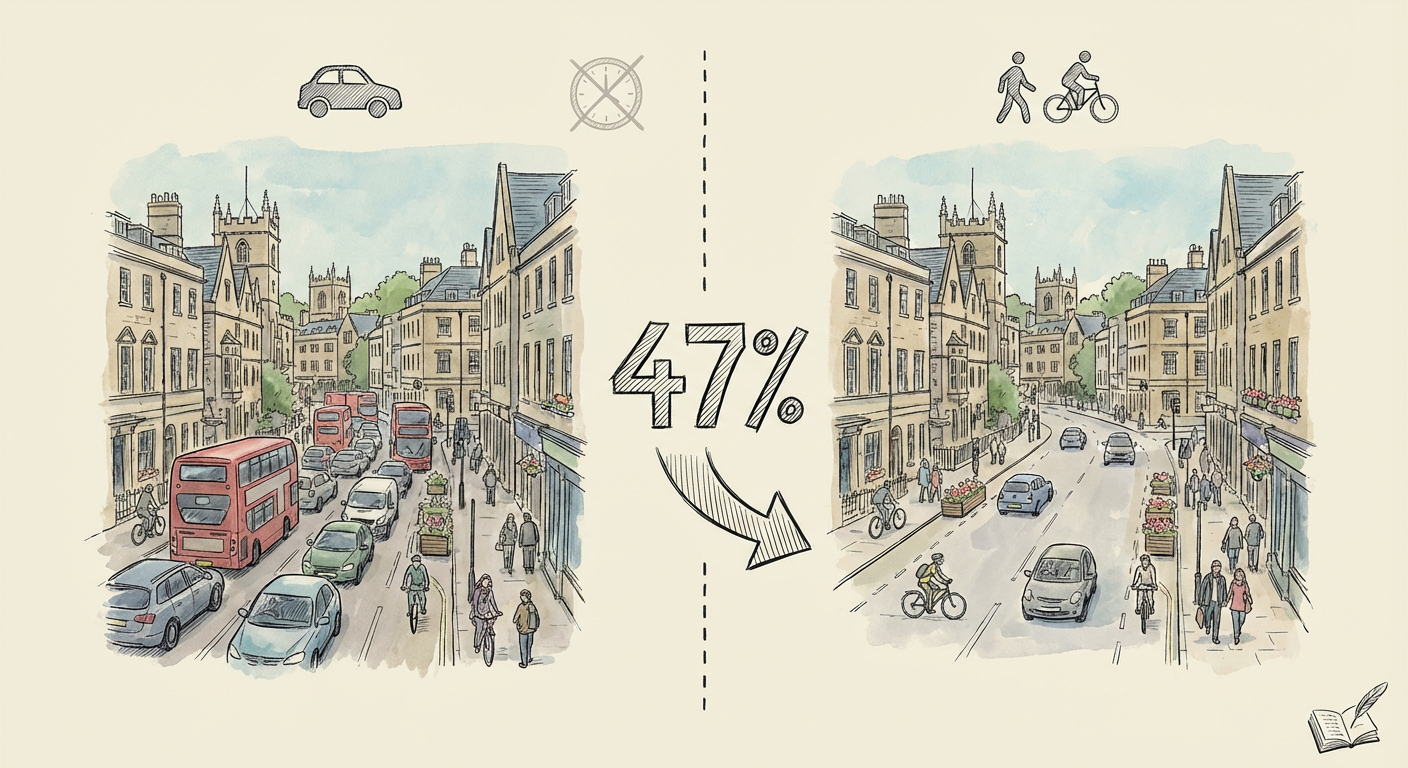
Meanwhile, other parts of what these policies actually involve get almost no attention. Take Oxford, England’s traffic filter program, which people often mischaracterize as a 15-minute city scheme. The filters reduced through-traffic in affected zones by 47 percent. Not banned it. Reduced it. Residents could still drive; they just weren’t funneling through residential streets as a shortcut to elsewhere. That’s a traffic management tool dressed up as a surveillance plot in many retellings.

What the International Evidence Actually Tells Us

Cities that have genuinely invested in walkability and neighborhood accessibility report some interesting changes. Paris, which is genuinely pursuing 15-minute neighborhood principles, saw cycling trips increase by 60 percent since 2020 as they built out protected bike lanes and local retail incentives. That’s a real shift in how people move. Some people love it. Others feel their city has changed in ways they didn’t choose.

In Melbourne, Australia’s 20-minute neighborhood pilot zones, car trips for errands dropped by 18 percent among residents. Again, not eliminated. Reduced. People still have cars. The infrastructure just made alternatives viable for some trips, and some people took them.

The pattern across places that have actually implemented these ideas is consistent: they change behavior at the margins. They don’t eliminate choice; they make different choices easier or harder. The question isn’t whether these changes happen, the data confirms they do. The question is whether you think those changes are good or bad for your neighborhood.

Why 27 American Cities Are Experimenting Despite the Backlash

Here’s what might surprise you: despite the controversy swirling around 15-minute city terminology, 27 U.S. cities are actively piloting zoning reforms centered on walkability and neighborhood accessibility. Detroit, Minneapolis, Sacramento, and others are tinkering with regulations that would allow more mixed-use development, easier small business permitting, and local-serving retail closer to residential areas. The Congress for the New Urbanism 15-Minute City Overview tracks these efforts, and the list keeps growing.

Why would planners keep pushing these ideas if the public backlash is so fierce? Because they’re looking at different data than the people in our Facebook group. They’re seeing aging suburban infrastructure, declining downtown retail corridors, and people, especially younger and older people, who want to live differently than their parents did. They see this as a solution to real problems: isolation, car dependency, the death of neighborhood commercial districts.

But here’s the structural reason for the conflict: they’re trying to solve yesterday’s problems with policies that some residents experience as threats to their current life. Someone who chose their neighborhood specifically because they could drive everywhere, who likes empty roads and quiet streets, isn’t going to welcome zoning changes that intensify development or prioritize pedestrians. Their preference for how the neighborhood functions isn’t a conspiracy theory. It’s just different from the planner’s vision.

Where We Actually Disagree, and Why That Matters

The real argument in our neighborhood isn’t about 15-minute cities at all. It’s about what kind of place this should be. Should neighborhoods become denser and more mixed-use, attracting more foot traffic and local business? Should car travel be slightly less convenient if it means other options are viable? Should we prioritize the preferences of residents who want walkability or the preferences of residents who want driving to be easy? These are legitimate disagreements with real tradeoffs.

The surveillance narrative, the conspiracy thinking about government control, that’s actually a symptom of a deeper problem. When people don’t trust institutions or feel like decisions are being made to them rather than with them, they interpret neutral planning language as code for something sinister. That’s not irrational; that’s what happens when top-down planning meets disconnected communities.

So here’s what actually matters: stop arguing about whether 15-minute cities are a real threat. They’re not a surveillance plot, but neither are they neutral technical fixes. They’re choices about what neighborhoods become. We should make those choices deliberately, with actual community input, with honest tradeoffs acknowledged. The data shows what walkability-focused planning does: it changes behavior at the margins, makes some trips easier, makes communities denser. Whether that’s good depends on what you actually want from where you live.

If you want to understand what’s actually being proposed for our neighborhood, the council minutes are online. The zoning proposals are public. The conversations are happening, and they’re worth showing up for, not to win, but to actually shape what comes next. That’s the part that doesn’t make the angry posts but makes the actual difference.

Your Neighborhood’s Tree Canopy Is a Political Issue Now — Here’s the 2025 Data That Should Be in Your Next Council Meeting

The Numbers That Changed Everything

I sat in the back of our last city council meeting with my laptop open, coffee going cold, because I’d finally found the thing that makes tree canopy impossible to ignore. American Forests released their 2025 Tree Equity Score analysis, and it shows something that feels almost too obvious once you see it: low-income neighborhoods in the same city have on average 33% less tree canopy than wealthy neighborhoods. That gap has actually gotten worse since 2020, not better. We’ve been talking about equity for years, but here’s the gap in actual leaves and branches, measured and mapped.

What got me wasn’t just the number itself. It was thinking about what that looks like on a Tuesday afternoon. One neighborhood where kids wait for the bus under actual shade. Another neighborhood three miles away where they’re standing in direct sun at 98 degrees. Same city. Different futures for the nervous systems and heat-related hospital visits of kids who had no choice in where they were born.

This is the part where most people expect me to say something demoralizing about how broken everything is. I’m not going to do that. Because the same week those numbers dropped, Houston passed a $100 million Tree Canopy Equity Initiative specifically targeting the 40 ZIP codes where tree cover has dropped below 10%. They did it after their neighborhoods experienced devastating heat in 2023 and 2024. They decided to act. So the question for your city isn’t whether this is possible. It’s whether your council has seen the data yet.

Why This Suddenly Matters at 2 AM in July

Trees aren’t decorative. They’re infrastructure. And we have the math on them now in a way we didn’t five years ago. The USDA Forest Service has a tool called i-Tree that over 600 American cities use to measure exactly what their urban forests do. The national calculation is sobering and specific: urban trees provide approximately $8.6 billion annually in ecosystem services. That’s stormwater management, reduced energy costs, measurable value in dollars that any finance committee understands.

But here’s the part that matters on your street: a 2025 peer-reviewed study published in Nature Cities found that for every 10% increase in tree canopy cover in dense urban areas, summer surface temperature drops by 1 degree Fahrenheit. One degree. That sounds small until you’re living through a heat wave and that one degree is the difference between your air conditioning running all night or your elderly neighbor keeping it off because the bill’s already too high.

The tree canopy problem isn’t environmental poetry. It’s a heat equity problem. It’s a water management problem. It’s a children’s asthma problem. And it’s a problem where we can actually quantify the solution and put it in a budget line item.

The Money Is There. The Question Is Capacity.

The Bipartisan Infrastructure Law allocated $1.5 billion to the USDA Urban and Community Forestry Program through 2026. That’s real money. It’s available now. The catch, which I learned by actually reading the grant cycle documents instead of just the press releases, is that applications arrive in regular cycles and most small and mid-sized municipalities don’t have the staff capacity to chase them.

I met with someone from our city planning department last month who told me they’re running three programs with two full-time people. They’re not choosing not to apply for federal tree money. They’re literally managing triage. The resources are sitting there, but they need someone to help write the application. Sometimes they need someone to just know the application exists.

This is where it gets actionable. Check the USDA Urban and Community Forestry Program Grants website. Look at the next application cycle. Ask your city council member or parks director if your city is applying. If the answer is no, ask why. If the answer is yes but they’re understaffed, there are volunteer grant-writing networks, community colleges with nonprofit management programs, people in your neighborhood who do this for a living and might help pro bono.

What You Actually Take to City Council

I bring things to city council meetings now. Printouts. The American Forests Tree Equity Score Tool lets you map your specific neighborhood. You can see your tree equity score compared to other neighborhoods in your city. You can show your council member their own district. You can say: this is what heat equity looks like in our community, and here’s what the science says about fixing it.

Bring the Nature Cities study. Bring the economic calculation about $8.6 billion in annual ecosystem services. Bring Houston’s initiative. These aren’t environmental arguments that might feel abstract to a budget committee. They’re economic arguments and heat arguments and fairness arguments. They’re specific enough to write into a budget line.

Ask three questions at council: Have we mapped our tree equity gaps? Are we applying for USDA forestry grants? What’s our plan for canopy in neighborhoods below the city average? Listen to the answers. They tell you whether this is someone who’s thinking about this problem or someone who hasn’t yet.

The Saturday After the Meeting

I’m not going to pretend that one data point solves everything. Tree canopy takes years to grow. Policy takes longer. But what changes is visibility. Once you know your neighborhood is 33% short on shade compared to three neighborhoods over, you can’t unknow it. Once you’ve read the temperature data, you know it’s not a preference question anymore. It’s a fairness question.

Some neighborhoods are already organizing. Some are waiting to see if their council will move first. Some haven’t connected the dots between their summer heat bills and tree cover yet. If that’s your neighborhood, the data is ready. The money is available. The science is clear. What’s missing is just people in coffee shops and council chambers saying: we read the numbers, and we’d like to do something about it. If you want to start, bring the 2025 data to your next meeting. I’ll bring coffee.

The Third Place Is Dying in Your Town — And 2026 Data Shows Us Why

You’ve Noticed It, Even If You Haven’t Named It

Something shifted in your neighborhood, and you can’t quite put your finger on it. The coffee shop where people used to linger for hours closed last spring. The library’s community room sits empty most evenings. That bar where everyone knew everyone’s name turned into a franchise location. You find yourself going home after work, scrolling through your phone, feeling oddly disconnected from people who live three houses down.

The Third Place Is Dying in Your Town — And 2026 Data Shows Us Why

This isn’t just nostalgia. This is the collapse of what urban sociologist Ray Oldenburg called “the third place” — those casual public spaces between home and work where real community happens. And the data from 2024 and 2025 is alarming enough that city planners and community organizers are finally treating it as a crisis worth solving.

Here’s what’s real: only 22% of Americans now visit a non-home, non-work social space on a weekly basis. That’s down from 41% in 2000. In suburban communities especially, people report having no close friends at a rate that has quadrupled since 1990. The loneliness isn’t accidental. It’s structural. And understanding why is the first step toward actually doing something about it.

Illustration for The Third Place Is Dying in Your Town — And 2026 Data Shows Us Why

Why the Numbers Broke — And They Broke Fast

The independent coffee shop is a useful canary in the coal mine. In 2024 alone, independent coffee shops closed faster than they opened for the third year running. The math is simple and brutal: commercial rent has climbed an average of 18% since 2022. That’s not a gradual drift. That’s an avalanche. A small business owner who was managing at 2022 rent levels suddenly faces a choice between raising prices, cutting hours, or closing the door.

Coffee shops, dive bars, bookstores, community centers, gyms where people actually talked to each other — these weren’t gold mines. They were modest operations that worked when the economics made sense. When landlords realized they could extract more value by replacing a $1,500-a-month community gathering spot with a cell phone kiosk or rotating pop-up, they did. The third place didn’t survive on sentiment. It survived on thin margins. And those margins evaporated.

The U.S. Surgeon General Advisory on Loneliness and Isolation connected these dots explicitly: as physical gathering spaces contracted, social isolation spiked. People didn’t spontaneously decide to stay home more. They stayed home because there was nowhere accessible to go. The pathways to casual friendship — bumping into the same person at the coffee counter, joining a book club that met Thursdays at the library, becoming a regular anywhere — those pathways were systematically eliminated by market forces nobody voted for.

Your Town’s Score Might Be Lower Than You Think

The Project for Public Spaces released their 2025 Placemaking Index, and the findings were sobering. Out of hundreds of American cities evaluated, only 11 scored high enough to have what researchers called “healthy third place ecosystems.” Most mid-sized cities — the towns and suburbs where most Americans actually live — scored below 40 out of 100. That’s not just poor. That’s broken.

What does a score below 40 look like in practice? It means few places where strangers naturally become acquaintances. Parks that exist but feel unsafe or unwelcoming. Restaurants and cafes where you’re expected to consume and leave, not linger. Libraries that cut evening and weekend hours because of budget pressure. A town where you can live for years and never develop a genuine sense of belonging, never make a single friend rooted in your actual neighborhood.

You can check your city’s score yourself through the Project for Public Spaces Placemaking Resources. Once you know where your community stands, the next question becomes: what actually works to fix this? That’s where the good news starts to show up.

What Actually Works — And What’s Happening Right Now

A handful of cities stopped waiting for the free market to solve this and started treating third place infrastructure like the public good it actually is. Tempe, Arizona and Raleigh, North Carolina ran a pilot program in 2025 that seems almost too simple to work. They created “Third Place Activation Grants” — direct funding of $5,000 to $25,000 given to small community venues like independent coffee shops, bookstores, community centers, and local bars to help offset commercial rent and stay open.

The results? Eighty-seven percent of grant recipients in Tempe were still operating 12 months later. That’s not a home run in traditional business terms. But it’s a home run in terms of keeping spaces alive where humans can gather casually and build actual relationships. The cost per venue was measured in thousands. The return was neighborhoods where people felt connected again.

Other cities are experimenting with different solutions. Some are offering property tax breaks or zoning changes that make it easier to operate modest gathering spaces. Some are protecting ground-floor retail from conversion to office or residential use. Some are funding community programming in existing parks and libraries to make them feel active and welcoming during off-peak hours. One solution doesn’t work everywhere. But doing nothing is no longer the default.

What You Can Actually Do Monday Morning

You don’t need to wait for your city council to act, though pushing them matters too. Start by identifying what third places still exist in your neighborhood — and I mean really identifying them, not assuming. Is there a park with actual programming? A library with regular events? A café that seems to have regulars? A community garden? A local bar or restaurant where people seem to know each other? Visit one. More than once. Become a regular. Bring someone else.

Talk to the owners of small gathering spaces about what would actually help them survive. Rent pressure is real, but so is the fact that people often don’t know these spaces exist. Loyalty programs, volunteer community events, word-of-mouth campaigns — these things cost almost nothing and they matter. If you find a third place worth saving, save it the most direct way: show up, spend money there, tell other people to do the same.

Then move to the harder work. Read your city council minutes. Attend zoning board meetings. Ask questions about commercial rent, about ground-floor retail, about how the city actively supports community gathering spaces. You’ll probably find that nobody on the city council has thought about third places as a policy question. That’s your opening. Communities that treat third place infrastructure as a priority — the way they treat roads and police and water — actually maintain those spaces.

Your town’s brokenness isn’t inevitable. It’s not generational entropy. It’s a policy failure happening in real time, which means it’s also a policy problem that can be solved. Start by naming it. Then start showing up. Let me know what you find in your neighborhood.