Category Archives: My Blog

When Mrs. Chen’s Kitchen Became a Food Hub (And What We Can Learn From What We Lost)

The Kitchen That Fed a Block

Mrs. Chen’s apartment on Maple Street had the kind of kitchen that violated every modern building code. The gas stove from 1962 crowded against a refrigerator that hummed too loud, and the countertop barely fit two cutting boards side by side. But during the spring of 2020, that cramped space somehow produced meals for thirty-seven households.

She started by cooking extra rice for the elderly couple next door when grocery delivery slots became impossible to book. Word spread through the building’s group text. Soon neighbors were dropping off ingredients they couldn’t use and picking up containers of her famous congee. No one kept track of who contributed what. The math just worked.

Mrs. Chen moved away last fall when her rent jumped $400. The building installed a package locker system in the lobby where people used to leave extra vegetables from their gardens. We gained convenience and lost something harder to measure.

The Systems We Built Without Noticing

Mutual aid networks aren’t new. They’re what people create when formal systems fail or don’t exist yet. Before food stamps, neighbors shared meals. Before unemployment insurance, people passed around job leads and lent tools. These networks operate on what economists call “generalized reciprocity” — you help when you can, take what you need, and trust the balance works out over time.

What’s different now is how deliberately we have to rebuild what used to happen organically. The corner store where people posted handwritten notes about needing rides or offering babysitting got replaced by a chain pharmacy with corporate bulletin board policies. The front porches where information traveled became Ring doorbell cameras. We gained security and lost serendipity.

Modern mutual aid networks compensate for this loss by creating intentional connection points. The Little Free Library movement puts tiny book exchanges in neighborhoods precisely because we no longer have daily reasons to interact with people who live three houses down. Community fridges work the same way. They’re not just about food access, they’re about creating a reason to pause, contribute, and notice each other.

Resource Sharing That Actually Works

The most effective resource sharing networks I’ve seen start small and specific. The tool library that began in Sarah Kim’s garage now operates out of a converted shipping container behind the community center. Members borrow everything from socket wrench sets to pasta makers using a simple checkout system built on trust and WhatsApp reminders.

What makes it work isn’t the inventory tracking spreadsheet (though Sarah maintains an impressive one). It’s the fact that borrowers often return tools in better condition than they found them, having cleaned or sharpened them during use. People take ownership because they have genuine stake in the system’s survival.

The network has prevented an estimated $12,000 in individual tool purchases over two years. But the real value shows up in unexpected places, like when three different members collaborated to help Jorge rebuild his deck, each contributing different expertise along with their borrowed equipment.

Building Networks That Last Beyond Crisis

Crisis creates mutual aid networks quickly, but keeping them alive requires different skills. The neighborhood pod system that formed during COVID’s early months connected twelve families for childcare, grocery runs, and general support. Most dissolved when restrictions lifted. The ones that survived shared certain characteristics.

First, they formalized just enough structure without killing spontaneity. The Elm Street pod meets monthly for coffee, maintains a shared calendar for major needs, and rotates coordination duties every six months. No one person becomes indispensable, but someone always knows who has the extra car seat or speaks Spanish.

Second, successful networks create value during good times, not just emergencies. The pod members still coordinate bulk buying for expensive items like organic meat and specialty flours. They’ve arranged group childcare for date nights and shared the cost of hiring a teenager to shovel everyone’s sidewalks. These practical benefits create the relationships that matter when someone loses a job or faces a medical crisis.

Starting Where You Are

Building mutual aid doesn’t require perfect politics or extensive organizing experience. It requires noticing what resources already flow through your daily life and finding small ways to make that flow more visible to others.

Maya started a “skill share” text thread after realizing her neighbors were individually hiring professionals for tasks like basic bike repair, hemming pants, and troubleshooting computer problems. The group now includes a retired machinist, a former tailor, a teenager who builds gaming computers, and a social worker who knows every city resource program. They handle requests that would cost hundreds of dollars on TaskRabbit.

The brilliant thing about Maya’s approach is its low barrier to entry. Contributing doesn’t require donating money or committing to regular volunteer shifts. Someone who can’t offer skills can offer their pickup truck for moves. Someone who can’t lift heavy things can offer their time for administrative tasks or childcare. The network grows stronger through different kinds of contributions rather than uniform commitment levels.

What We’re Really Building

Mrs. Chen’s kitchen worked because it emerged from existing relationships and daily rhythms. She wasn’t starting from scratch, she was building on established trust, shared spaces, and regular interaction. When we try to recreate these networks today, we’re not just sharing resources. We’re rebuilding the social infrastructure that makes sharing possible.

The question isn’t whether we need mutual aid networks. We’re already creating them, consciously or not, every time we ask for recommendations on neighborhood social media or borrow a ladder from someone down the street. The question is whether we’ll build them with intention, making them accessible to people beyond our immediate circles and strong enough to outlast the next crisis.

What informal resource sharing already exists in your neighborhood? Who are the people like Mrs. Chen, the ones whose contributions hold things together in ways we only notice after they’re gone?
Your City Council Just Banned Delivery Robots – Here’s Why That Might Be Smart Policy

When Innovation Meets Real Sidewalks

Last Tuesday night, while most of us were binge-watching something or scrolling through our phones, our city council made a decision that’s going to ripple through every neighborhood in town. They voted 7-2 to ban autonomous delivery robots from operating on public sidewalks. The tech bros are predictably upset, calling it “anti-innovation” and “backward thinking.” But if you actually dig into what happened in other cities that embraced these rolling coolers with cameras, the picture gets a lot more complicated.

I’ve been following this issue since the first Starship robot showed up outside the college campus last spring, and I can tell you the council didn’t make this call lightly. They spent months reviewing data from cities across the country, holding public hearings that actually mattered, and wrestling with questions that don’t have easy answers. Sometimes the best policy decisions look boring from the outside but protect something valuable that we might not notice until it’s gone.

The Numbers Tell a Story About Our Sidewalks

San Francisco learned this lesson the hard way. After initially welcoming delivery robots with open arms, the city had to scramble to impose strict limits when sidewalk accessibility complaints skyrocketed by 340% in just one year. They now cap each company at three robots per district, which sounds reasonable until you realize how many companies want a piece of this market. It’s like trying to manage a parking problem by giving everyone just a few spots.

The accessibility issue isn’t abstract policy talk. When Starship Technologies was operating at full capacity last year, their robots completed nearly three million deliveries nationwide. That sounds impressive until you learn about the 1,247 documented cases where their robots blocked sidewalks, creating real barriers for people using wheelchairs, pushing strollers, or navigating with visual impairments. These aren’t minor inconveniences. They’re violations of basic mobility rights that we’ve spent decades establishing through laws like the Americans with Disabilities Act.

Amazon quietly discontinued their Scout delivery robot program in nearly half of their test cities after municipalities started passing restrictions in response to mounting complaints. When a company with Amazon’s resources and lobbying power can’t make the regulatory math work, that tells you something about how real these concerns are for local governments.

The Small Business Effect Nobody Talks About

Here’s where the story gets really interesting, and where our council showed they actually understand how cities work. Cambridge, Massachusetts discovered that neighborhoods with heavy robot delivery traffic saw foot traffic to local businesses drop by 12%. Think about that for a minute. These robots aren’t just changing how we get our packages. They’re changing how we move through our own neighborhoods.

When people stop walking to the corner store because a robot brings everything to their door, the corner store owner notices. When fewer people stroll past the local coffee shop on their way to pick up groceries, the coffee shop notices. The Brookings Institution study documented this pattern across multiple cities, showing how technology can reshape the economic geography of a neighborhood in ways nobody expected.

Our downtown merchants association testified at three different council meetings about this exact concern. They weren’t asking for protection from competition. They were asking for protection from a technology that could hollow out the street-level activity that makes downtowns work in the first place. There’s a difference.

What Good Policy Actually Looks Like

The council’s decision wasn’t a knee-jerk rejection of new technology. They studied the National League of Cities policy guide and talked with disability rights advocates, business owners, and urban planning experts. They looked at cities that tried to regulate robots after the fact and saw how much harder it is to put the genie back in the bottle once companies have established operations and users have changed their habits.

The smart move was recognizing that sidewalks aren’t just transportation routes. They’re public space where democracy happens at the most basic level. They’re where neighbors run into each other, where kids learn to navigate the world, where small businesses connect with their communities. When you start treating sidewalks mainly as delivery corridors for private companies, you’re making a choice about what kind of city you want to live in.

This doesn’t mean our city is anti-technology or anti-convenience. The council left room for revisiting the policy if companies can demonstrate solutions to the accessibility and local business impacts. They’re not slamming the door shut. They’re asking tech companies to do better homework before using our public space as their testing ground.

Why This Matters for Every Neighborhood Issue

The delivery robot debate is really about something bigger: whether local communities get a say in how new technologies reshape their daily lives. It’s about whether we plan for change or just let change happen to us. Every neighborhood in our city is going to face versions of this question over the next decade, from e-scooter regulations to autonomous vehicle testing to whatever comes next.

What our council showed this week is that good local government means thinking through the second and third-order effects of policy decisions. It means listening to the people who actually use sidewalks every day, not just the people building robots. It means recognizing that innovation isn’t automatically good just because it’s innovation, and convenience isn’t worth sacrificing accessibility or community life.

The next council meeting is October 15th, and they’re taking up the e-scooter parking ordinance that’s been stuck in committee for months. If you care about how technology integrates with our neighborhoods, this is where the real decisions get made. Not in the headlines or the hot takes, but in the boring Tuesday night meetings where democracy actually works. I’ll be there with my usual terrible coffee and stack of documents. You should come too.

Why Three Streets in Riverside Have Lead Pipes While Cherry Hills Got New Water Lines Last Year

The Map Nobody Wants to Show You

Last month, I sat in on the water utility board meeting where they discussed infrastructure upgrades for 2024. Cherry Hills Subdivision got $2.3 million for new water lines. Riverside neighborhoods, where the median income is half that of Cherry Hills, got a promise to “assess the situation” regarding their 1940s lead service lines. When I asked for the lead pipe map after the meeting, I was told it would take six weeks to process my records request.

This is environmental racism in action, and it’s happening in our backyards. But here’s what nobody tells you: there are specific tools we can use right now to change these outcomes. The trick is knowing where to look and how to ask the right questions.

Finding the Environmental Justice Hot Spots in Your Own Neighborhood

The EPA’s EJScreen tool will show you exactly what your neighborhood is dealing with. Plug in any address and you’ll see air quality, water concerns, and demographic data side by side. When I mapped our city last week, the pattern was stark: neighborhoods with higher percentages of renters and people of color consistently scored higher for environmental hazards.

But the real goldmine is your state’s environmental agency database. In our state, you can search for every industrial permit, cleanup site, and air quality violation by zip code. I found that the metal finishing plant on Industrial Avenue has violated air quality standards twelve times in three years. Guess which elementary school sits half a mile downwind?

Local health departments also track asthma rates by neighborhood. Our county’s data shows children in Eastside zip codes are hospitalized for asthma at three times the rate of kids in Westside neighborhoods. That’s not coincidence. It’s not genetics either.

The Budget Meeting Strategy That Actually Works

City budgets are environmental justice documents, even when nobody calls them that. The parks department’s tree planting budget reveals which neighborhoods get shade and air filtration. The public works capital improvements plan shows whose streets get upgraded first.

I’ve learned that timing matters enormously. Budget discussions happen twice a year in most cities: preliminary discussions in spring and final votes in fall. Show up to the spring meetings with specific asks. Last year, our group pushed for $150,000 to clean up the contaminated lot at Fifth and Main by presenting a detailed proposal during budget season.

Come armed with your own numbers. When the city says they can’t afford lead pipe replacement, have the EPA data showing federal grants available for environmental justice communities. When they claim all neighborhoods get equal treatment, bring the tree canopy maps showing 40% coverage in wealthy areas versus 8% in working-class neighborhoods.

Building Power Through Strategic Partnerships

Environmental justice work succeeds when different groups find common ground. The homeowners association worried about property values and the tenants union concerned about air quality both want that illegal dump site shut down.

Churches often have meeting space and established trust in communities. Labor unions understand occupational health hazards and have experience fighting powerful interests. Parent groups at schools know exactly which kids are missing days due to asthma attacks.

Last spring, our coalition included the Riverside Neighborhood Association, Local 412, and the Interfaith Climate Action Group. We had very different reasons for opposing the proposed waste transfer station, but our joint testimony at the planning commission was impossible to ignore. The project was voted down 7-2.

The Enforcement Gap and How to Close It

Environmental laws exist, but enforcement is wildly uneven. Companies violate air quality permits in low-income neighborhoods because they know nobody’s watching. The solution isn’t just better laws. We need better monitoring and organized community pressure.

Every state has a citizen enforcement provision allowing residents to sue polluters when agencies won’t act. It sounds intimidating, but environmental law clinics at local universities often provide free legal support. The law school clinic here helped residents file suit against the concrete plant after the state ignored two years of dust complaints.

Technology is making monitoring easier and cheaper. Air quality sensors now cost under $300. Soil testing kits are available through cooperative extension offices for $25. The key is collecting data systematically and presenting it in ways that force official response.

Document everything. Photos with timestamps. Health department complaint numbers. Records requests with response dates. When agencies claim there’s no problem, your documentation becomes the evidence that proves otherwise.

Next Saturday’s Tree Planting and Beyond

We’re planting 40 trees on Elm Street this Saturday at 9 AM, targeting the blocks with the least canopy coverage. Bring water and work gloves. The city provided the trees, but only after six months of residents showing up to council meetings with heat island maps and emergency room data.

This is how environmental justice works in practice: combining data with action, building coalitions across difference, and showing up consistently until systems change. It’s not about saving the world in one dramatic gesture. It’s about understanding exactly how your city works and then working it.

What would you find if you mapped the environmental hazards in your neighborhood against the budget priorities in your city? More importantly, what would you do with that information once you had it?

Your Neighbor Could Be Moving Into Social Housing Soon (And That’s Actually Great News)

What Just Changed in Your Backyard

Remember when your friend Maria spent three years on the waitlist for affordable housing, only to get bumped because she got a small raise that put her fifty dollars over the income limit? Or when your coworker Jake had to move two hours away because even with his teacher’s salary, nothing in the city felt remotely affordable? Those stories are about to get a lot less common.

Your Neighbor Could Be Moving Into Social Housing Soon (And That's Actually Great News)
Your Neighbor Could Be Moving Into Social Housing Soon (And That’s Actually Great News)

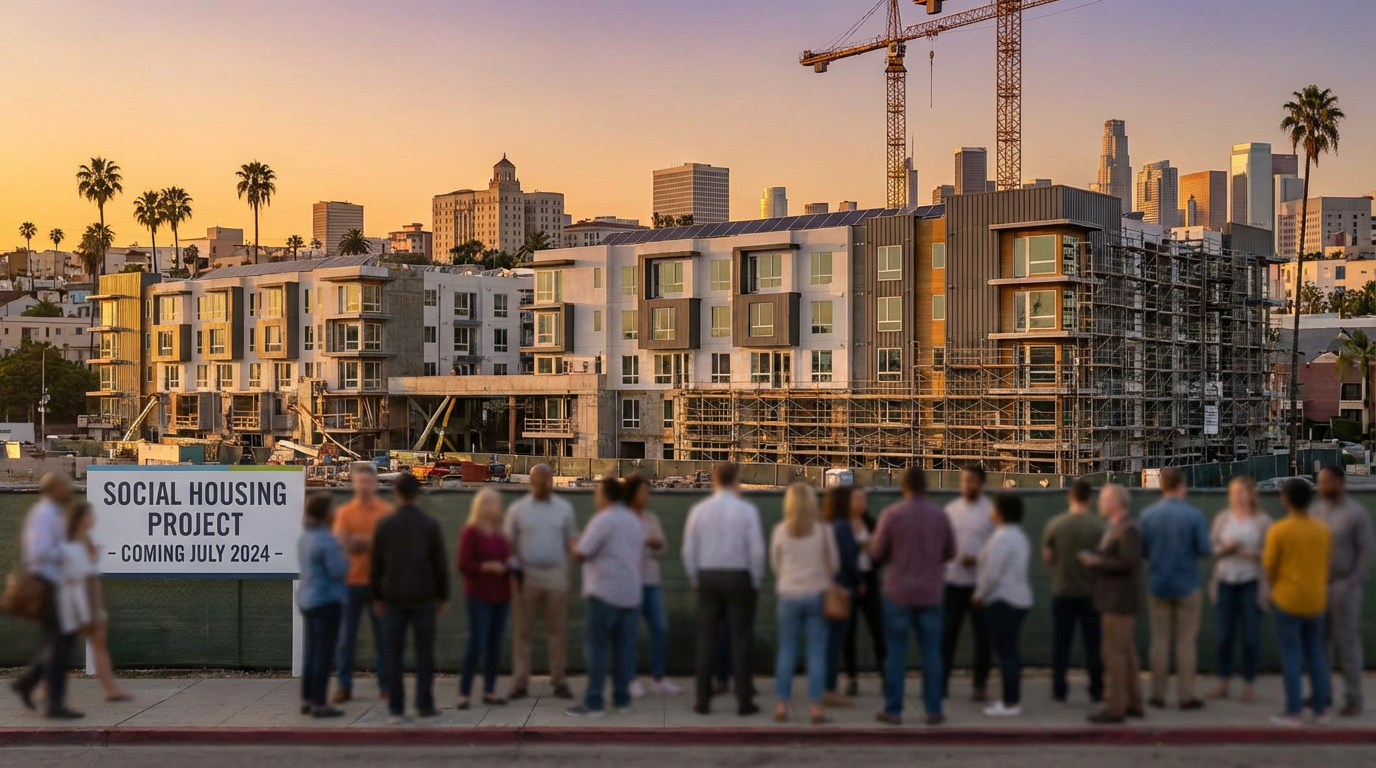
This July, California’s AB 2334 officially takes effect, and it’s bringing something we haven’t seen before: social housing that actually works for regular people. Not just those in crisis, not just those at the very bottom of the income ladder, but the firefighters and nurses and shop managers who make our communities run but can’t afford to live in them anymore.

The California Housing Department AB 2334 Implementation creates a completely different approach. Instead of separating housing by income level, these new developments will mix market-rate renters with people paying reduced rates based on their earnings. Up to thirty percent of residents can pay full market rent, while others pay what they can actually afford.

Illustration for Your Neighbor Could Be Moving Into Social Housing Soon (And That's Actually Great News)
Illustration for Your Neighbor Could Be Moving Into Social Housing Soon (And That’s Actually Great News)

The Numbers That Matter to Real Families

Let’s talk about what this actually means in your wallet. Under the traditional affordable housing system, if you’re a single teacher in San Francisco making sixty thousand dollars a year, you probably make too much for affordable housing but nowhere near enough for market rate. You’re stuck in that impossible middle ground that’s been squeezing out the backbone of our communities.

The new social housing model changes that math completely. Residents earning up to one hundred and twenty percent of the area median income can qualify. In practical terms, that means a household making up to about ninety thousand dollars in many California cities could access housing where they pay no more than thirty percent of their income in rent.

California is backing this shift with $2.8 billion over four years. Los Angeles will receive the largest chunk at $680 million, but every region will see funding flow to local housing authorities and developers willing to build these mixed-income communities. San Francisco alone estimates it could create fifteen thousand new units by 2030, with groundbreaking on the first projects set for August 2026.

Learning from Vienna (Yes, That Vienna)

This isn’t some untested experiment. California looked across the ocean to Vienna, Austria, where sixty-two percent of residents live in government-built housing with rent capped at twenty percent of their income. Not sixty-two percent of poor residents. Sixty-two percent of all residents, including doctors and engineers and small business owners.

The Vienna Social Housing Success Story shows what happens when you stop treating housing as a luxury good and start treating it as essential infrastructure, like roads or schools. Vienna’s social housing developments aren’t grim concrete blocks tucked away in forgotten corners. They’re beautiful, well-maintained communities in desirable neighborhoods where people want to live.

Here’s what Vienna figured out decades ago: when you mix incomes in the same buildings, everyone benefits. Higher-earning residents contribute more in rent, which helps support their neighbors while keeping their own costs reasonable. The buildings get better maintenance because people with options choose to stay. Kids grow up in economically diverse environments. Communities become stronger and more resilient.

What This Looks Like on Your Street

Imagine walking past a new apartment complex in your neighborhood. From the outside, you can’t tell who’s paying market rate and who’s paying reduced rent based on their income. The building has good design, decent parking, maybe a small courtyard where kids can play safely. The retail space on the ground floor houses a local coffee shop and a dry cleaner.

Inside, apartment 4B might house a young firefighter and her partner, paying twenty-five percent of their combined income. Next door in 4C lives a retired librarian whose Social Security stretches much further now. Upstairs, a software engineer pays full market rate but still saves money compared to similar units in the private market because the building operates on a nonprofit model.

This isn’t about creating charity housing or warehousing poor people away from everyone else. It’s about recognizing that housing costs have spiraled so far beyond reasonable that we need a systematic response. It’s about rebuilding the economic diversity that used to exist naturally in our neighborhoods before speculation and financialization broke the housing market.

The Hard Questions Nobody’s Avoiding

Will this solve California’s housing crisis overnight? Absolutely not. Even fifteen thousand units in San Francisco represents a fraction of the need. Will there be implementation challenges, cost overruns, and political fights? Almost certainly. Will some people complain about government involvement in housing markets? They already are.

But here’s what’s different this time: we’re not pretending that market forces alone will fix what market forces helped break. We’re not means-testing people into different categories of deserving. We’re building housing the way we build schools or libraries, as public infrastructure that helps everyone while particularly supporting those who need it most.

The real test will be in the details. How quickly can cities get projects approved and construction started? How well will property management companies handle the mixed-income model? Will the funding levels prove sufficient, or will California need to invest even more to meet demand?

These aren’t small questions, and the answers will determine whether this becomes a model for the nation or another well-intentioned program that falls short of its promises. But for the first time in years, we’re asking the right questions about housing in California. We’re thinking bigger than band-aids and smaller than pipe dreams.

Got questions about how this might affect your city specifically? Your city council probably does too, and they’ll be making key decisions about implementation over the next year. Now might be a good time to start showing up to those meetings. I’ll see you there.

How to Stay Plugged Into City Hall When You Can Barely Remember Parent-Teacher Conferences

The Tuesday Night Reality Check

It’s 7:15 PM on a Tuesday. Your kid just spilled spaghetti sauce on their homework, the dishwasher is making that sound again, and somewhere across town, the city council is voting on whether to approve a new apartment complex three blocks from your house. You find out about it Friday morning when your neighbor mentions it over the fence, and you feel that familiar pang of civic guilt.

Here’s what I’ve learned after years of trying to balance community involvement with the beautiful chaos of family life: perfect attendance at every meeting isn’t the goal. Strategic engagement is. You don’t need to become a policy wonk to have a voice in decisions that affect your neighborhood. You just need to know where to look and when to show up.

Building Your Information Pipeline

Most city websites bury the good stuff, but once you know where to dig, you can set up systems that work around school pickup times and soccer practice. Start with your city’s email newsletters, which usually hit your inbox weekly and highlight upcoming votes. Sign up for alerts from your city council representative’s office too. When Councilwoman Martinez’s office sends updates about the bike lane proposal coming up for vote, that’s your cue to pay attention.

The real treasure is your city’s agenda center, usually linked from the main government page. These agendas post 72 hours before meetings and tell you exactly what’s being discussed. I scan them over coffee on Sunday mornings and flag anything that mentions my neighborhood, schools, or parks. Takes about ten minutes and saves me from missing the things that actually matter to my family’s daily life.

Local Facebook groups and neighborhood apps like Nextdoor can be goldmines, but approach them strategically. Join your official neighborhood association group and maybe one broader city group. Skip the groups that are mostly complaint fests. You want information, not outrage.

When to Actually Show Up

You don’t need to attend every meeting, but certain moments demand your physical presence. Public hearings on zoning changes, school budget discussions, and votes on major infrastructure projects benefit from seeing actual residents in the room. When the planning commission discusses that proposed gas station near the elementary school, they need to see parents’ faces, not just read written comments.

Most city councils reserve time for public comment, usually early in the meeting. You can often speak for two to three minutes without signing up in advance. Practice your main point in the car. Keep it personal but focused. Instead of “this is bad for the community,” try “my eight-year-old walks past this intersection every morning, and here’s what I’ve observed about traffic patterns.”

If evening meetings are impossible with your schedule, many cities now offer hybrid options or record sessions. Some councils hold Saturday morning work sessions that are more family-friendly. Check if your city council does coffee hours or walking meetings. Councilman Rodriguez holds office hours at the library every first Saturday, which means my kids can play while I talk transit policy.

The Power of Strategic Partnerships

Find your civic buddy system. Maybe you follow school board issues while your neighbor tracks housing developments. Share intel over weekend barbecues or in your group text. When five parents show up to speak about the same crosswalk safety issue, that’s way more powerful than one parent speaking alone.

Parent groups already mobilize effectively around school issues, so expand that energy. The PTA that organizes bake sale volunteers can organize testimony about after-school program funding. The soccer parents who coordinate snack schedules can coordinate attendance at parks and recreation budget hearings.

Local nonprofits often do the heavy lifting of research and advocacy. Groups like your local transit advocacy organization or affordable housing coalition need volunteers for specific tasks. You might not have time to become a board member, but you could write three postcards to council members or spend two hours at a weekend phone bank.

Making Your Voice Count Between Meetings

Email works, especially for time-sensitive issues. City council members actually read constituent emails, particularly ones that reference specific agenda items or upcoming votes. Keep them short, include your address to prove you’re a real constituent, and focus on one issue per email. When you email about the library closure proposal, mention that your family uses the children’s programs twice a week and would face a 25-minute drive to the next closest branch.

Follow your representatives on social media and engage thoughtfully. When Councilwoman Chen posts about the new bike share program, comment with your family’s experience using similar programs in other cities. This isn’t about becoming a political insider. It’s about making sure your family’s perspective gets heard.

Written comments for public hearings carry real weight, especially when you can’t attend in person. Submit them 24 hours in advance when possible. Include your address and be specific about impacts. The council member reading your comment about how the proposed development would affect your kids’ walk to school will remember that detail.

The Ripple Effect Reality

Small actions compound in ways that surprise you. The email you send about sidewalk repairs might not fix your block immediately, but it adds to the data when budget season arrives. The three minutes you speak about playground equipment helps staff justify the parks department’s capital request six months later.

Your kids notice this engagement more than you think. When my daughter sees me reading city council minutes or hears me on a phone call with our council representative’s office, she’s learning that regular people can influence decisions. She’s learning that democracy isn’t just voting every few years. It’s staying connected to the unglamorous work of local governance that shapes our daily lives.

The truth is, most local decisions get made by whoever shows up. Busy families have just as much right to be part of that “whoever” as anyone else. The question isn’t whether you have time for civic engagement. The question is whether you can afford not to make time for the decisions that shape your neighborhood, your schools, and your family’s everyday reality.

Why Three Community Gardens Failed Last Year (And How Riverside Avenue’s Is Actually Working)

The Plot Twist Nobody Saw Coming

Last Tuesday’s Parks Committee meeting had an agenda item that made me sit up straight: “Community Garden Sustainability Review.” Translation: they’re finally talking about why three of our five community gardens went dormant in 2023, while the scrappy little plot behind the Riverside Avenue bus stop is somehow thriving with a six-month waiting list.

The difference isn’t what you’d expect. It’s not about soil quality or water access. It’s about who shows up to the 7 AM Saturday meetings, and more importantly, who feels welcome to stay.

The Real Infrastructure: Who Runs the Spreadsheets

Maria Santos has been coordinating the Riverside garden since 2021, and she does something most garden organizers don’t: she tracks actual participation data. Not just plot rentals, but who shows up for communal work days, who shares tools, who helps with the compost system. Her spreadsheets reveal patterns that explain why some gardens work and others become expensive vacant lots.

The failed Maple Street garden had thirty-seven plot holders on paper, but only eight people doing the shared labor. Meanwhile, Riverside’s twenty-two plots support eighteen regular volunteers because Maria built rotation systems that don’t assume everyone has Saturday mornings free. Their WhatsApp group coordinates evening watering shifts and weekend-morning-alternative work sessions.

When I asked Maria what she wishes she’d known before starting, she said: “Community gardens fail when they’re designed by people who garden as a hobby, for people who garden as a hobby.” Riverside works because it was planned around the reality that some members are growing food they actually need to eat.

The Money Trail: Beyond Plot Fees

The Parks Department’s budget breakdown shows why good intentions aren’t enough. Each community garden gets $2,400 annually for basic maintenance, plus whatever plot fees generate. But successful gardens actually need $4,000-6,000 yearly when you factor in tool replacement, soil amendments, and infrastructure repairs that volunteers can’t handle.

Riverside found their funding gap through partnerships most organizers don’t think to pursue. The nearby community college’s horticulture program provides student interns who get credit for garden maintenance hours. Local restaurant Sage & Thyme buys surplus produce at cost, creating a small revenue stream. The neighborhood association allocates $800 yearly from their budget because garden members consistently show up to association meetings.

The three failed gardens all relied solely on plot fees, which meant raising rates when expenses increased, which meant losing members, which meant raising rates again. It’s a death spiral Maria avoided by diversifying income before problems hit.

What Actually Grows Community (It’s Not Tomatoes)

The most successful shared spaces solve multiple problems at once. Riverside’s garden includes a tool library, a composting program that accepts kitchen scraps from nearby apartments, and monthly skill-shares that cover everything from seed saving to small-scale food preservation. These programs draw people who don’t want garden plots but do want community connection.

Compare that to the failed Oakwood garden, which was strictly about individual plots. When plot holders moved away or lost interest, nothing remained to anchor ongoing community engagement. The space became a collection of individual projects rather than a shared resource.

The tool library component particularly matters because it helps renters who can’t store larger equipment and new gardeners who don’t want to invest in tools before knowing if they’ll stick with it. This fall, they’re adding a seed library housed in the nearby Little Free Library, extending their resource-sharing model beyond the garden fence.

Getting Started: The Actual Next Steps

If you’re thinking about starting something similar, begin with the Parks Department’s Shared Space Application, available on their website under “Community Programs.” The application process takes 3-4 months, so plan accordingly. But before you fill out paperwork, spend time in existing gardens during different seasons and times of day to understand how they actually function.

Maria recommends starting with a core group of five to seven people who commit to one year of organizing together before recruiting more members. This group should include at least one person comfortable with basic bookkeeping, one with gardening experience, and one who knows how to navigate city bureaucracy. The most important skill, though, is someone who’s good at running meetings that people actually want to attend.

The next community garden information session is scheduled for February 15th at the Main Library, 6 PM. Maria will be there, along with representatives from the other active gardens. They’ll have actual budgets, waiting list procedures, and governance structures to examine. Bring questions about the boring practical stuff that makes these projects work long-term.

Are you noticing other shared spaces in the neighborhood that are thriving or struggling? What makes the difference between community resources that stick around and ones that quietly disappear?

Why Three Downtown Businesses Are Fighting Over the Same Customers (And What We Can All Learn From It)

Last Tuesday’s chamber of commerce meeting turned into something nobody expected. What started as a routine discussion about the summer sidewalk sale became a heated exchange between Maya’s Coffee Roastery, Thompson’s Used Books, and Riverside Yoga about overlapping customer bases and competing event schedules. By the time I left, three business owners who’ve been neighbors for years weren’t speaking to each other.

The conflict isn’t really about coffee versus books versus yoga. It’s about something deeper: how small businesses survive when they’re all fishing in the same small pond, and what happens when collaboration feels impossible because everyone’s barely keeping their heads above water.

The Numbers Behind the Tension

Here’s what I learned digging into the city’s commercial district data after that meeting. Our downtown core has added seven new businesses in the past eighteen months, but foot traffic has only increased by twelve percent according to the parking authority’s counts. Maya pointed out that her morning rush now gets split three ways since the new bagel place and smoothie bar opened. Thompson noted his weekend book club events used to draw twenty people. Now he’s lucky to get twelve.

Riverside Yoga’s owner, Jennifer, made the most pointed observation: “We’re all fighting over the same 300 families who actually shop local regularly, while thousands of our neighbors drive to the mall without thinking twice.” The math is pretty sobering. Our neighborhood has roughly 8,000 residents, but the downtown merchant association estimates only about fifteen percent are regular customers at multiple local businesses.

When Good Intentions Collide

The sidewalk sale dispute shows how quickly cooperation can break down. Maya wanted to offer free coffee samples to draw people to the book sale tables. Thompson worried this would turn his literary event into a coffee marketing opportunity. Jennifer suggested adding yoga demonstrations, which both others saw as irrelevant to their customers. Three people trying to help each other ended up feeling used instead.

This happens because each business owner sees the challenge through their own survival lens. Maya’s been struggling since the café chain opened in the strip mall. Thompson’s dealing with online competition and declining foot traffic. Jennifer’s trying to differentiate from two other yoga studios that opened nearby. When you’re stressed about making rent, collaboration can feel like charity you can’t afford to give.

The problem isn’t personality conflict. It’s structural. Small businesses are expected to both compete and collaborate, to be self-reliant while also supporting each other, in an economic environment that makes both increasingly difficult.

What Actually Works: Learning From Oak Street

Three blocks over on Oak Street, five businesses figured out something different. Instead of competing for the same customers, they decided to create new ones together. The hardware store, flower shop, deli, bike repair place, and gift boutique formed what they call a “customer sharing cooperative.”

Here’s how it works in practice. When someone buys flowers, they get a coupon for a sandwich at the deli. Bike repair customers get discounts on hardware store items. Gift boutique customers get referrals to the flower shop for special occasions. Instead of splitting existing customers, they’re cross-pollinating and creating reasons for people to visit multiple businesses in one trip.

The results speak for themselves. Oak Street businesses report an average thirty percent increase in new customer visits over the past year. More importantly, they’re seeing repeat customers who now think of Oak Street as a destination rather than individual stops. The flower shop owner told me, “We stopped seeing each other as competition and started seeing ourselves as a neighborhood shopping experience.”

The Infrastructure of Cooperation

What Oak Street has that our downtown core lacks isn’t better people or easier circumstances. It’s deliberate infrastructure for cooperation. They meet monthly with a simple agenda: what worked, what didn’t, and what to try next. They share a joint marketing budget funded by small monthly contributions. Most importantly, they have an agreement that no business will schedule major events without checking with the others first.

This isn’t about friendship or good vibes. It’s about practical systems that make collaboration easier than competition. The downtown businesses haven’t failed morally. They’ve simply never built the structures that would make working together feel logical instead of risky.

The city council is considering a small business cooperation grant program based on Oak Street’s model. The proposal would provide seed money for merchant groups that commit to joint marketing and coordinated event planning. It’s not charity, it’s infrastructure investment, like fixing roads or improving sidewalks.

Beyond the Business District

This tension between individual survival and collective success shows up everywhere in our neighborhood. Parent groups competing for volunteer hours. Community organizations duplicating each other’s programs. Residents fighting over limited parking instead of advocating together for better public transit.

The solution isn’t asking people to be more generous or community-minded. It’s creating conditions where cooperation becomes the obvious choice. Sometimes that means changing policies, like the proposed business cooperation grants. Sometimes it means changing practices, like the Oak Street model of scheduled coordination. It always means recognizing that individual struggles often have structural solutions.

Next month, the chamber of commerce is hosting a follow-up meeting specifically about business collaboration models. Maya, Thompson, and Jennifer have all confirmed they’ll attend. The agenda focuses on practical questions: How do we schedule events that support each other? What would joint marketing look like? How do we measure success collectively instead of just individually?

The answers won’t be simple, but the questions are finally the right ones. What cooperation structures would make sense in your corner of the neighborhood? And who else might be asking the same question?

When Good People Fight: What Three Years of Neighborhood Organizing Taught Me About Productive Conflict

The Tree Wars of Maple Street

Let me tell you about the Great Tree Debate of 2022, because it taught me more about grassroots organizing than any workshop ever could. Our neighborhood association had secured funding to plant forty new trees along Maple Street. Simple enough, right? Plant trees, make shade, everyone wins. Except within two weeks, we had three distinct factions: the “native species only” camp, the “fast-growing canopy” advocates, and the “what about my view” homeowners. The city council meeting where we were supposed to finalize the plan turned into a two-hour marathon of passionate testimony about everything from property values to climate adaptation.

When Good People Fight: What Three Years of Neighborhood Organizing Taught Me About Productive Conflict

What struck me wasn’t that people disagreed. It was how quickly the disagreement revealed deeper tensions about who gets heard in our neighborhood, how decisions get made, and what we prioritize when resources are limited. The retired landscape architect who wanted native oaks had lived here for thirty years and remembered when the street was lined with elms. The young family pushing for fast-growing maples were dealing with a toddler’s bedroom that hit 85 degrees every summer afternoon. The longtime residents worried about blocked sight lines had real concerns about traffic safety, and the newcomers worried about climate change weren’t wrong either.

Everyone had legitimate concerns rooted in real experience. The conflict wasn’t really about trees at all.

Illustration for When Good People Fight: What Three Years of Neighborhood Organizing Taught Me About Productive Conflict

Why Structure Matters More Than Passion

Here’s what I learned from watching that debate unfold: good people can create terrible processes without even realizing it. Our neighborhood association had great intentions but lousy systems for handling disagreement. We had no clear decision-making process, no framework for weighing different priorities, and no established way to ensure everyone’s voice got heard before we moved forward. When conflict erupted, we defaulted to whoever could speak loudest or longest at meetings.

The breakthrough came when Maria, a community organizer with twenty years of experience, attended one of our meetings and gently pointed out what was happening. She helped us step back and design a process that could actually handle disagreement productively. We created small listening sessions for each block, developed criteria for evaluating tree options together, and established a clear timeline with built-in checkpoints for community input. Most importantly, we agreed on how we’d make the final decision before we got attached to specific outcomes.

This sounds bureaucratic, but it was actually liberating. Once people understood the process and trusted it was fair, they could focus on sharing their genuine concerns instead of fighting to be heard. The landscape architect started collaborating with the climate-focused residents on hybrid options. The sight-line worriers worked with city staff to identify specific problem spots. We didn’t eliminate disagreement, but we channeled it toward problem-solving instead of position-taking.

Reading the Room vs. Reading the System

Traditional organizing advice focuses heavily on reading personalities and managing interpersonal dynamics. That matters, but I’ve found it’s more useful to read the systems that shape how people interact. Why do the same three people always dominate discussion? Usually because meetings happen when working parents can’t attend, or because the format rewards people comfortable with public speaking, or because informal networking happens in spaces not everyone can access.

In our tree project, the initial conflict looked personal. The native-species advocate seemed stubborn and backward-looking. The fast-growing tree supporters appeared impatient and dismissive of neighborhood history. But when we dug deeper, the real issue was timing. The funding had a six-month deadline, city approval required specific documentation, and the planting window was narrow. Everyone felt pressured to fight for their preferred solution immediately instead of exploring alternatives together.

Once we acknowledged these constraints openly and built our process around them, people relaxed. We mapped out exactly what needed to happen when, identified which decisions were truly urgent versus which ones we could revisit, and created multiple opportunities for input instead of forcing everything into one contentious meeting. The structural changes shifted the interpersonal dynamics more effectively than any amount of facilitation or conflict mediation could have.

This pattern shows up everywhere in grassroots organizing. The school board meeting where parents clash over mask policies often reflects deeper frustrations about communication and transparency. The neighborhood group that can’t agree on traffic calming measures might actually be struggling with different assumptions about how change happens in city government. Address the structural issues, and the personal conflicts often resolve themselves.

Building Coalitions That Can Handle Disagreement

The most effective grassroots coalitions I’ve seen don’t avoid internal disagreement. They get good at working through it productively. This requires intentionally building what organizers call “relational infrastructure” before you need it. You develop shared analysis of problems, establish trust through smaller collaborative projects, and practice decision-making processes when the stakes are low.

Our neighborhood association now starts every major initiative with what we call “alignment sessions.” We spend time understanding why different people care about the issue, what outcomes would feel like wins for various stakeholders, and what constraints we’re all working within. We map out decision points in advance and agree on criteria for evaluating options. We identify where we expect disagreement and plan for it instead of hoping it won’t happen.

This groundwork pays off when real conflicts emerge. During a recent debate about parking restrictions, we had heated disagreement about enforcement priorities. But because we’d already established shared goals around pedestrian safety and neighborhood accessibility, people could argue about tactics without questioning each other’s motivations. The business owner pushing for flexible enforcement and the parent advocating for strict rules both wanted safe streets for kids. They just had different theories about how to achieve that goal.

The conversation stayed focused on evidence and effectiveness instead of devolving into personal attacks or ideological arguments. We ended up with a hybrid approach that satisfied both concerns: clear rules with built-in review periods and community input on adjustments. More importantly, we strengthened relationships instead of damaging them through the disagreement process.

What Actually Changes Things

After three years of intensive neighborhood organizing, I’m convinced that sustainable change comes from building systems that can handle ongoing disagreement, not from achieving perfect consensus. The most successful campaigns I’ve been part of created frameworks that allowed different perspectives to contribute to better solutions over time.

Our tree project eventually resulted in a diverse mix of species chosen through genuine collaboration between residents with different priorities. The traffic calming initiative led to pilot programs that we could adjust based on community feedback. The affordable housing coalition developed decision-making processes that multiple neighborhood groups now use for their own planning efforts. In each case, the real victory wasn’t getting our preferred outcome, but building capacity for neighbors to work through complex issues together.

This approach requires patience and long-term thinking that can feel frustrating when urgent problems demand immediate action. But I’ve seen too many grassroots efforts burn out or fracture because they prioritized speed over sustainability, or consensus over genuine inclusion. The neighborhoods that actually solve problems over time are the ones that get comfortable with productive disagreement and invest in systems that support it.

What organizing challenges are you facing in your community? I’d love to hear about the conflicts that are revealing deeper structural issues, and the processes that are helping people work through disagreement productively. Coffee’s always on here on Saturday mornings if you want to talk through strategies, and yes, we’ll probably end up planning some kind of community project together.