
When a Planning Concept Becomes a Culture War
If you’ve scrolled through our neighborhood Facebook group lately, you know the temperature has risen considerably around “15-minute cities.” Someone posts about a new bike lane or a zoning change designed to keep grocery stores within walking distance, and suddenly you’ve got comments about government control, surveillance, and mandatory neighborhood imprisonment. The passion is real. The concern feels urgent. And yet, when you actually look at what’s being implemented and what the evidence shows, the gap between the anxiety and the reality is worth examining.

This isn’t about dismissing concerns. Urban planning changes affect how we live, and skepticism about top-down policy is healthy. But there’s a structural reason our neighborhood is arguing about 15-minute cities while operating from fundamentally different sets of facts. That’s worth understanding, not just for the sake of civility, but because it actually matters for how we move forward together.
What’s Actually Happening vs. What People Think Is Happening
Let’s start with the perception problem. According to recent Pew Research Center Urban Mobility Survey data, only about a third of Americans have even heard the term “15-minute city.” Of those who have, 41 percent immediately associate it with government surveillance or restrictions on movement. That’s the real story here: not what 15-minute city policies actually do, but what people have come to believe they do.
The surveillance concern is worth examining because it doesn’t appear in any actual U.S. implementation of walkability-focused urban planning. No American city has used 15-minute city zoning to restrict where residents can travel. That isn’t happening. Not in Minneapolis, not in Sacramento, not anywhere. Yet the fear is widespread enough that it’s shaping real neighborhood conversations about real infrastructure choices.
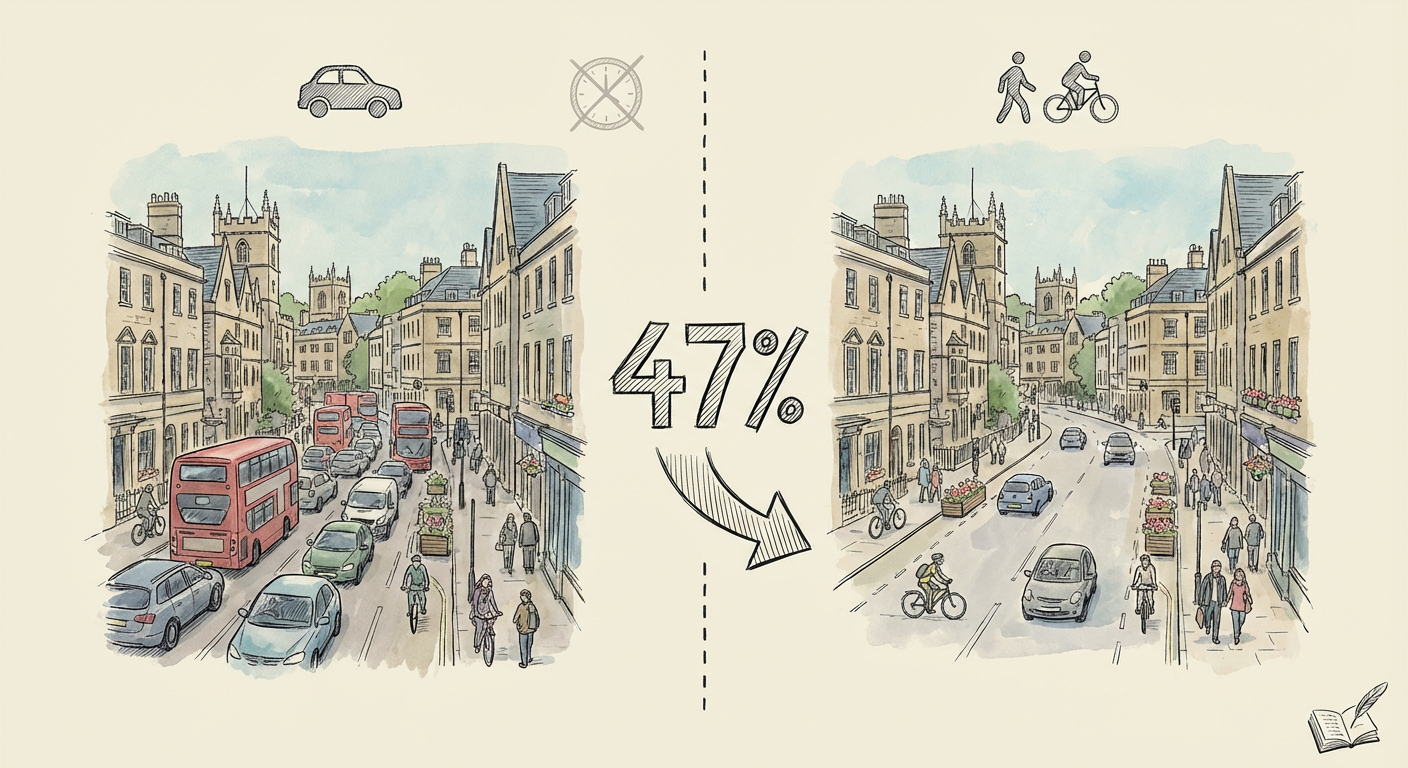
Meanwhile, other parts of what these policies actually involve get almost no attention. Take Oxford, England’s traffic filter program, which people often mischaracterize as a 15-minute city scheme. The filters reduced through-traffic in affected zones by 47 percent. Not banned it. Reduced it. Residents could still drive; they just weren’t funneling through residential streets as a shortcut to elsewhere. That’s a traffic management tool dressed up as a surveillance plot in many retellings.
What the International Evidence Actually Tells Us
Cities that have genuinely invested in walkability and neighborhood accessibility report some interesting changes. Paris, which is genuinely pursuing 15-minute neighborhood principles, saw cycling trips increase by 60 percent since 2020 as they built out protected bike lanes and local retail incentives. That’s a real shift in how people move. Some people love it. Others feel their city has changed in ways they didn’t choose.
In Melbourne, Australia’s 20-minute neighborhood pilot zones, car trips for errands dropped by 18 percent among residents. Again, not eliminated. Reduced. People still have cars. The infrastructure just made alternatives viable for some trips, and some people took them.
The pattern across places that have actually implemented these ideas is consistent: they change behavior at the margins. They don’t eliminate choice; they make different choices easier or harder. The question isn’t whether these changes happen, the data confirms they do. The question is whether you think those changes are good or bad for your neighborhood.
Why 27 American Cities Are Experimenting Despite the Backlash
Here’s what might surprise you: despite the controversy swirling around 15-minute city terminology, 27 U.S. cities are actively piloting zoning reforms centered on walkability and neighborhood accessibility. Detroit, Minneapolis, Sacramento, and others are tinkering with regulations that would allow more mixed-use development, easier small business permitting, and local-serving retail closer to residential areas. The Congress for the New Urbanism 15-Minute City Overview tracks these efforts, and the list keeps growing.
Why would planners keep pushing these ideas if the public backlash is so fierce? Because they’re looking at different data than the people in our Facebook group. They’re seeing aging suburban infrastructure, declining downtown retail corridors, and people, especially younger and older people, who want to live differently than their parents did. They see this as a solution to real problems: isolation, car dependency, the death of neighborhood commercial districts.
But here’s the structural reason for the conflict: they’re trying to solve yesterday’s problems with policies that some residents experience as threats to their current life. Someone who chose their neighborhood specifically because they could drive everywhere, who likes empty roads and quiet streets, isn’t going to welcome zoning changes that intensify development or prioritize pedestrians. Their preference for how the neighborhood functions isn’t a conspiracy theory. It’s just different from the planner’s vision.
Where We Actually Disagree, and Why That Matters
The real argument in our neighborhood isn’t about 15-minute cities at all. It’s about what kind of place this should be. Should neighborhoods become denser and more mixed-use, attracting more foot traffic and local business? Should car travel be slightly less convenient if it means other options are viable? Should we prioritize the preferences of residents who want walkability or the preferences of residents who want driving to be easy? These are legitimate disagreements with real tradeoffs.
The surveillance narrative, the conspiracy thinking about government control, that’s actually a symptom of a deeper problem. When people don’t trust institutions or feel like decisions are being made to them rather than with them, they interpret neutral planning language as code for something sinister. That’s not irrational; that’s what happens when top-down planning meets disconnected communities.
So here’s what actually matters: stop arguing about whether 15-minute cities are a real threat. They’re not a surveillance plot, but neither are they neutral technical fixes. They’re choices about what neighborhoods become. We should make those choices deliberately, with actual community input, with honest tradeoffs acknowledged. The data shows what walkability-focused planning does: it changes behavior at the margins, makes some trips easier, makes communities denser. Whether that’s good depends on what you actually want from where you live.
If you want to understand what’s actually being proposed for our neighborhood, the council minutes are online. The zoning proposals are public. The conversations are happening, and they’re worth showing up for, not to win, but to actually shape what comes next. That’s the part that doesn’t make the angry posts but makes the actual difference.