When Mrs. Chen Couldn’t Get to the Store
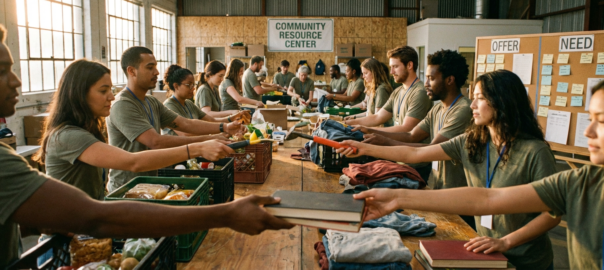
It started with groceries, the way most good things do in neighborhoods. Mrs. Chen, who lives three blocks from the Riverside Community Center, mentioned to her neighbor Janet that she was having trouble getting to the store since her arthritis flared up last winter. Janet offered to pick up a few things during her own shopping trip. Word spread through the informal network of dog walkers and front-porch conversations, and within two weeks, seven households were coordinating grocery runs for elderly or mobility-limited neighbors.
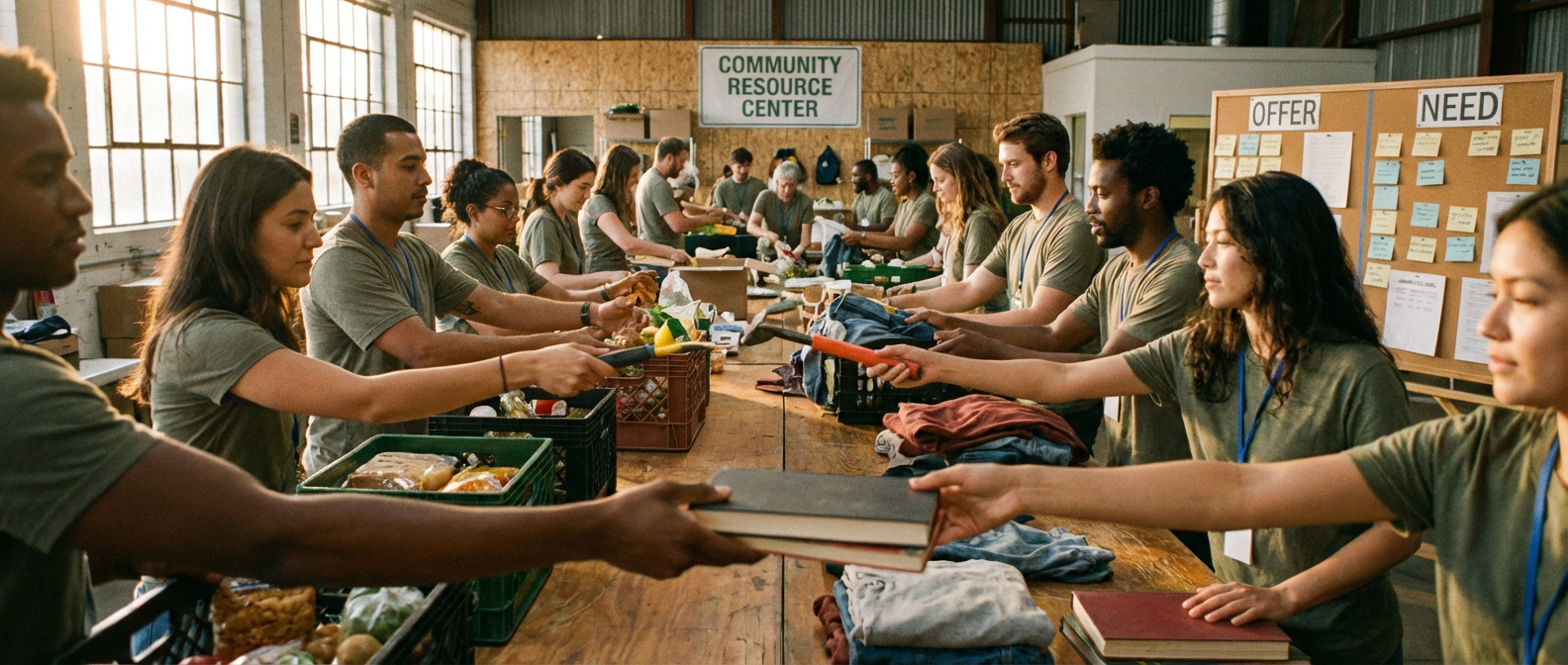
That was eighteen months ago. Today, the Riverside Mutual Aid Network serves 847 households across six zip codes, operates a tool library out of three garages, runs a weekly skill-share workshop series, and maintains a community refrigerator that prevented an estimated 2,400 pounds of food waste last year. The grocery runs still happen every Tuesday and Friday, but they’re now part of something much bigger. Much messier, too, if I’m being honest.
“We discovered we had everything we needed,” says Janet Morrison, who coordinates the Tuesday grocery group and works part-time at the local credit union. “We just needed to get organized about sharing it.”

The Infrastructure of Caring
Mutual aid sounds abstract until you see the spreadsheet. Janet pulls it up on her laptop at the community center, where we’re meeting on a Thursday morning between the senior fitness class and the after-school program setup. The spreadsheet tracks requests, offers, completed connections, and follow-ups across twelve categories: transportation, food, tools, skills, childcare, elder care, home repairs, technology help, job search support, language interpretation, emotional support, and what they call “emergency response.”
Last month’s numbers tell the story: 127 requests fulfilled, 89 new offers logged, 23 people trained in basic home repair skills, 6 families connected with immigration legal aid, and 1 community garden plot allocated to a family that had been buying vegetables with WIC vouchers at the corner store for twice what they cost at the supermarket across town.
The tool library operates on a simple checkout system managed through a group text thread. Sarah Kim, a software developer who moved to the neighborhood during the pandemic, built a simple web interface that lets people browse what’s available and reserve items. “My partner bought a tile saw for one bathroom project,” she explains. “It seemed ridiculous to let it sit in our garage when other people might need it.” The tool library now includes everything from power drills to pressure washers, camping gear to car seats, and a surprisingly popular collection of kitchen equipment for large-batch cooking. Though I have to wonder how many people actually return those stand mixers on time.
Learning to Ask, Learning to Offer
The hardest part, according to network members, isn’t logistics. It’s culture. “People around here are used to handling things on their own,” explains Marcus Williams, who joined the network after his wife died and he found himself struggling with childcare for his two daughters while working evening shifts at the hospital. “Asking for help felt like admitting failure.”
I get this. Growing up, we were taught to be self-sufficient, to not be a burden. But the network addresses this by making reciprocity visible and varied. Marcus now coordinates the weekend childcare circle, where families take turns watching each other’s kids during Saturday errands or Sunday morning activities. His daughters, ages 8 and 11, have become expert organizers of the quarterly clothing swap and run a small side business helping neighbors set up new electronics.
The skill-sharing workshops meet every Wednesday evening at rotating locations. Recent sessions have covered basic car maintenance, canning and food preservation, small engine repair, tax preparation, resume writing, and conflict resolution. “Everyone teaches, everyone learns,” says Dr. Patricia Okoye, a retired social worker who facilitates many of the sessions. “I’ve learned more about gardening and home brewing in the past year than I did in the previous decade.”
The network has developed what they call “low-barrier entry points” for new members. The community refrigerator, installed outside the community center with permission from the city, operates on a simple principle: take what you need, leave what you can. No signup required, no questions asked. Many people start there, either as contributors or beneficiaries, before getting connected to other network activities.
When Crisis Reveals Strength
The network’s emergency response capacity got its biggest test last February when an ice storm knocked out power for six days across most of the city. While utility crews worked to restore service, the mutual aid network activated what they called “warming centers” in homes that still had heat, coordinated food distribution from houses with gas stoves, and organized check-ins for vulnerable neighbors.
“We had a communication system that worked without electricity,” Janet explains. “People knew which houses to go to for updates, which neighbors had generators, who needed daily medication that required refrigeration.” The network’s response impressed city emergency management officials, who have since incorporated community resilience planning into their disaster preparedness protocols.
The storm also revealed gaps. Language barriers became more pronounced during the crisis, leading the network to establish a formal interpretation service coordinated through the local adult education center. Transportation challenges during emergency situations prompted the creation of a volunteer driver network for medical appointments and essential errands. These weren’t problems they’d anticipated, but they adapted quickly.
Building Beyond Transactions
What surprises visitors to Riverside neighborhood isn’t the efficiency of the mutual aid network, though that’s impressive. It’s the social fabric that has developed around resource sharing. Kids who grew up in the childcare circles are now teenagers who help with technology troubleshooting and lawn care for elderly neighbors. Adults who met through skill shares have formed book clubs, walking groups, and advocacy committees that show up to city council meetings when issues affect the neighborhood.
“Mutual aid isn’t charity,” emphasizes Dr. Okoye. “It’s community infrastructure. When you know your neighbors have tools you can borrow, skills you can learn, and time they’re willing to share, you make different decisions about how to solve problems. You think in terms of collective resources rather than individual consumption.”
The network has inspired similar efforts in neighboring areas, and Janet regularly fields calls from community organizers in other cities looking for advice on getting started. Her recommendation is always the same: start small, start local, and start with what people are already doing. “Mrs. Chen needed groceries,” she points out. “Everything else grew from there.” Though she admits not every neighborhood will develop this organically, and that’s okay too.
If you’re curious about mutual aid in your own neighborhood, the Riverside network maintains a simple resource guide on their website with templates, tips, and lessons learned. Or better yet, ask around about who might need groceries this week. Sometimes the best infrastructure begins with a single conversation. Just don’t expect it to be as neat and organized as that spreadsheet makes it look.